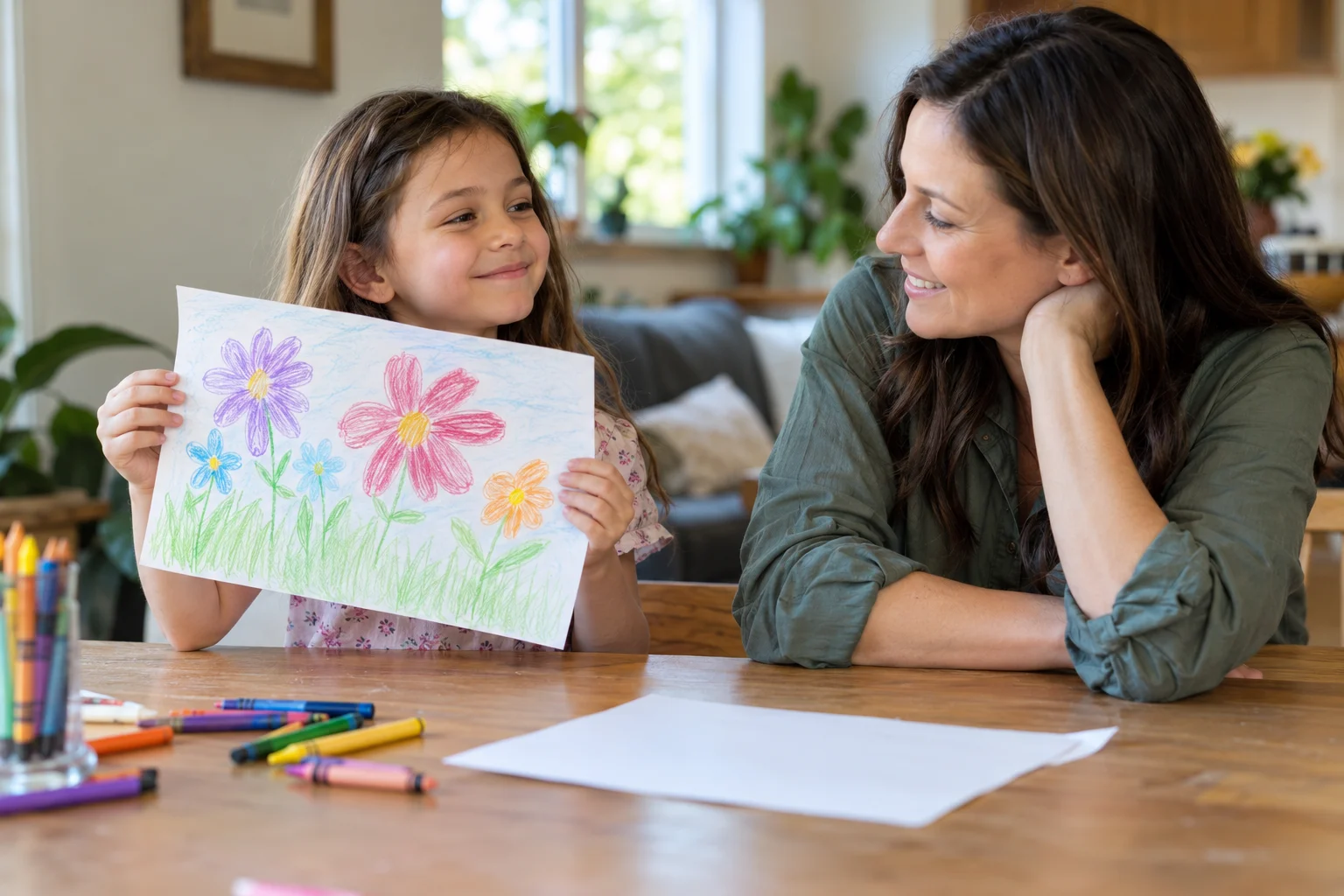
A child comes home quiet after someone says, “You can’t play with us.” Another crumples a drawing after hearing that it looks silly. These small moments can leave parents wondering what to say—and how to help their child respond next time.
You can give your child a few simple words to express their feelings, set a boundary, and ask for help. They do not need a perfect comeback. They need to know that you will listen and that they do not have to handle hurtful behavior alone.
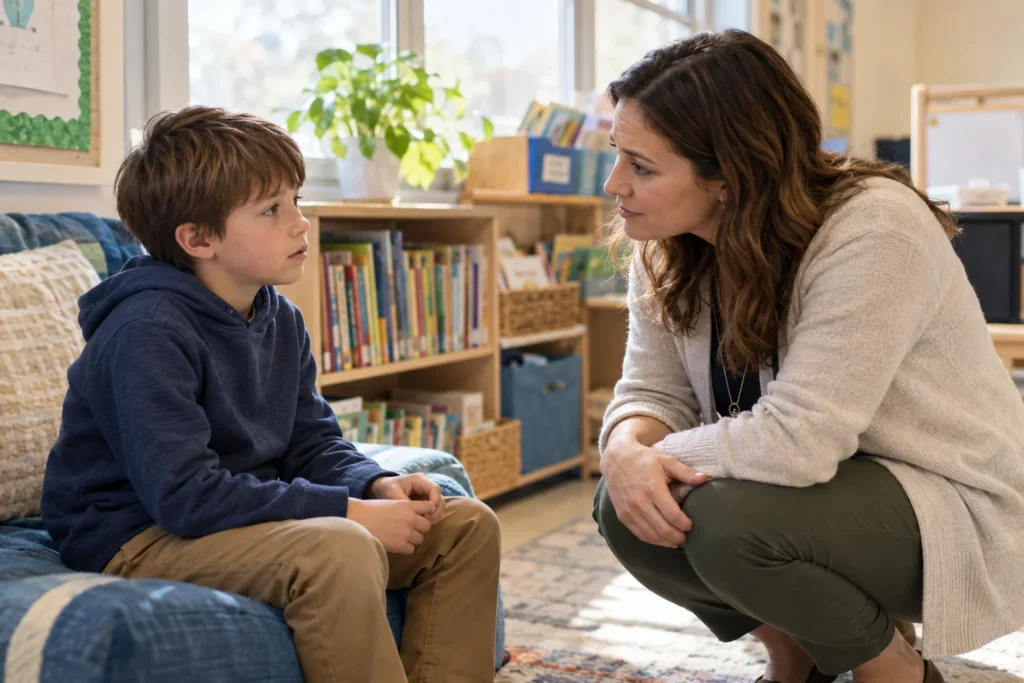
Start by Listening
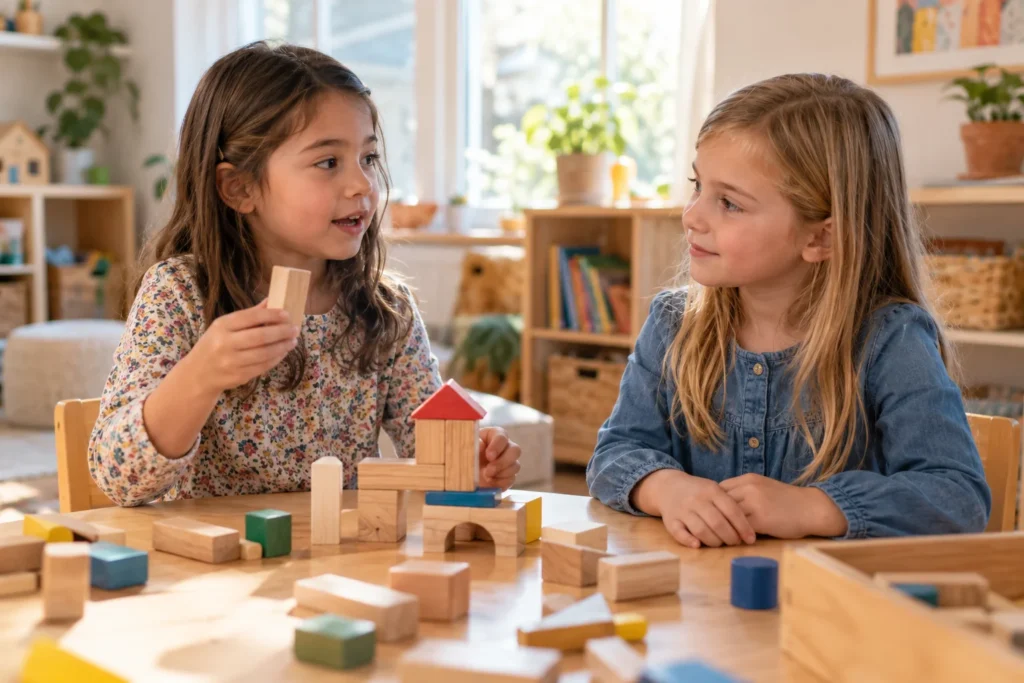
Before offering a response to practice, make room for your child’s story.
You might say, “Tell me what happened,” or “That sounds upsetting. I’m glad you told me.” Let them explain in their own words, without rushing to decide what the other child meant.
If they struggle to describe the feeling, offer possibilities: “Were you sad, angry, embarrassed, or something else?” Accept their answer, including “I don’t know.”
Try not to brush the experience aside with “It’s nothing.” A gentle response can be as simple as: “I can see that it mattered to you.”
Choose Short Words They Can Remember

Practice one or two phrases that fit your child’s age and speaking style:
- “Stop. I don’t like that.”
- “That hurt my feelings.”
- “Please ask before taking it.”
- “I need help.”
For a young child, “Stop” may be enough. A child who uses gestures or a communication device can practice a familiar signal or message. Speaking up does not have to look the same for everyone.
When it feels safe, a brief, clear response is one option. If responding feels unsafe or too difficult, walking away and finding a trusted adult is also appropriate.
Practice Six Everyday Situations
These examples are starting points. Let your child choose words that feel natural.
1. When Someone Leaves Them Out
If someone says, “You can’t play,” your child could try:
“Can I join the next round?”
If the answer stays unkind, they can choose another activity or find a welcoming friend. They do not need to keep asking a group that treats them badly. Repeated, targeted exclusion is something to bring to an adult.
2. When Someone Criticizes Their Skills
If another child says, “You’re bad at this,” a possible response is:
“I’m learning. Don’t make fun of me.”
Later, you can talk about a specific step they want to practice. They can enjoy an activity while still learning it.
3. When Someone Grabs a Toy
Your child could say:
“I’m using it. Please give it back.”
When sharing is appropriate, add: “You can have a turn when I’m finished.” They do not have to offer a turn with every personal possession. If grabbing continues, an adult can help.
4. When Someone Speaks Rudely
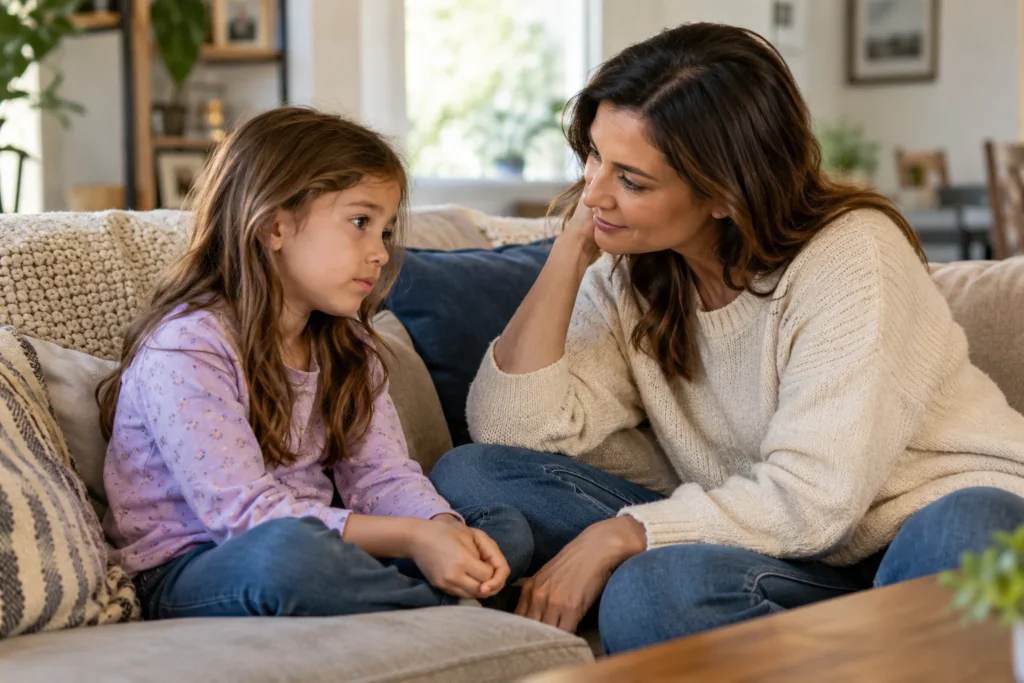
Try:
“Please speak kindly to me.”
Or, more directly:
“Don’t call me that.”
Your child does not need to argue or explain at length. A boundary can be one sentence, followed by moving away.
5. When a Friendship Changes
Hearing “I don’t want to be your friend” can hurt. Your child might say:
“I’m sad, but I’ll give you space.”
Explain gently that friendships cannot be forced. They can respect someone’s choice and still expect to be treated respectfully.
6. When Someone Dislikes Their Drawing
A simple response could be:
“I like what I made.”
You can also ask what your child enjoys about their picture. They do not need everyone to share their taste to keep creating.
Make Practice Playful
Choose a calm moment and try a short pretend scene with stuffed animals. One toy takes another toy’s block; together, practice “Please give it back.”
Swap roles so your child can also practice listening to someone else’s boundary. Keep it brief and stop if the activity becomes uncomfortable.
You might ask, “Would you like to try your words, or should I show you first?” Avoid requiring eye contact or a confident performance. The purpose is to make a useful response familiar.
Make Asking for Help Part of the Plan
Choose a few adults your child can approach, such as a parent, teacher, or school counselor. Practice a specific message:
“I asked them to stop, but they keep doing it. I need help.”
They can also ask for help immediately. They never have to confront someone first, especially when they feel frightened or unsafe.
If behavior repeats, involves threats or physical harm, or leaves your child afraid, contact the adults responsible for the setting. Keep a record of what happened and work together on a clear plan for support. Adults should intervene in bullying rather than expect children to resolve it alone.
Show Them What Respect Sounds Like
Use clear, respectful language in ordinary family moments: “I’m still speaking. Please let me finish,” or “I need a little space.”
When you speak sharply, repair it: “I’m sorry I raised my voice. I’ll say that again more calmly.” Let your child see that adults can set boundaries, listen, and apologize too.
End With Reassurance
After a difficult moment, you might say:
“You deserved to be treated kindly. I’m glad you told me. We’ll work out what to do together.”
Some days your child will use their words. Other days they may cry, freeze, or need you to speak for them. They still deserve your support. Keep the invitation open: their feelings matter, and you are ready to listen.