
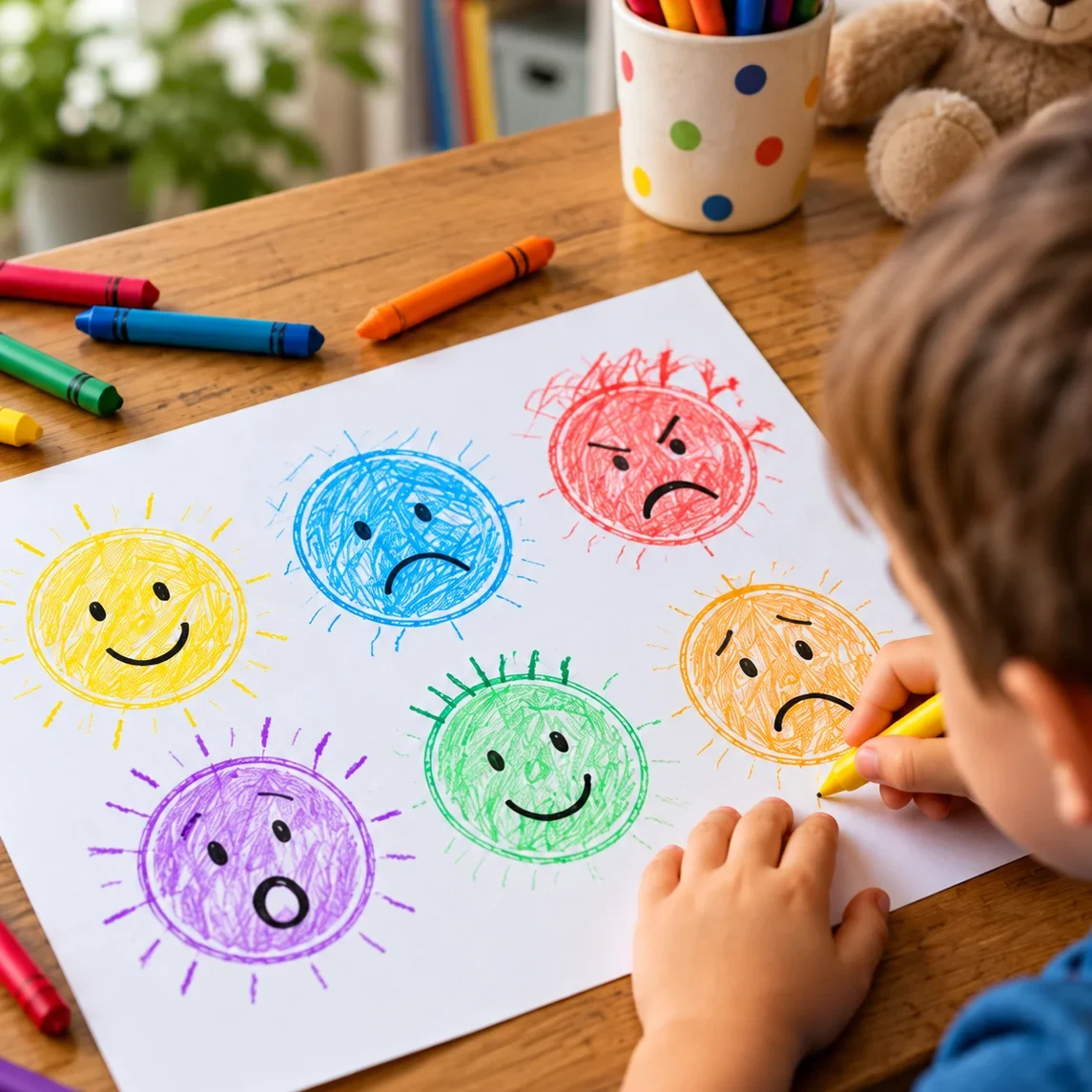
Sometimes a child can draw what they simply cannot say. Drawing helps young children express their feelings by giving emotions a place to go when words are still hard to find.
For little ones, a blank page can become much more than a place to make a picture. It can be a space for happiness, worry, excitement, anger, imagination, and everything in between.
Young children are still learning the words they need to describe complicated feelings. Drawing gives them another way to communicate while those language skills are developing.
It can also be a wonderfully calm activity at home. A few crayons, pencils, and sheets of paper are enough to give children the freedom to create without worrying about getting something right.
I like to sit nearby without asking too many questions at first. I have noticed that children often start explaining a picture on their own when they feel that nobody is rushing them to give an answer.
Most importantly, drawing should stay playful. Parents can show interest in what a child creates without treating every color, shape, or scribble as something that needs a deeper meaning.
Why Drawing Is Important for Young Children
- Emotional expression: Drawing can help children show feelings they may not yet know how to describe.
- Creative freedom: There is no single correct way to draw, giving children room to explore their own ideas.
- Growing confidence: Creating something independently can give a child a satisfying sense of accomplishment.
- Quiet connection: Looking at pictures together can naturally open conversations between children and parents.
- Skill building: Holding crayons and pencils also gives young children useful practice with hand control and coordination.
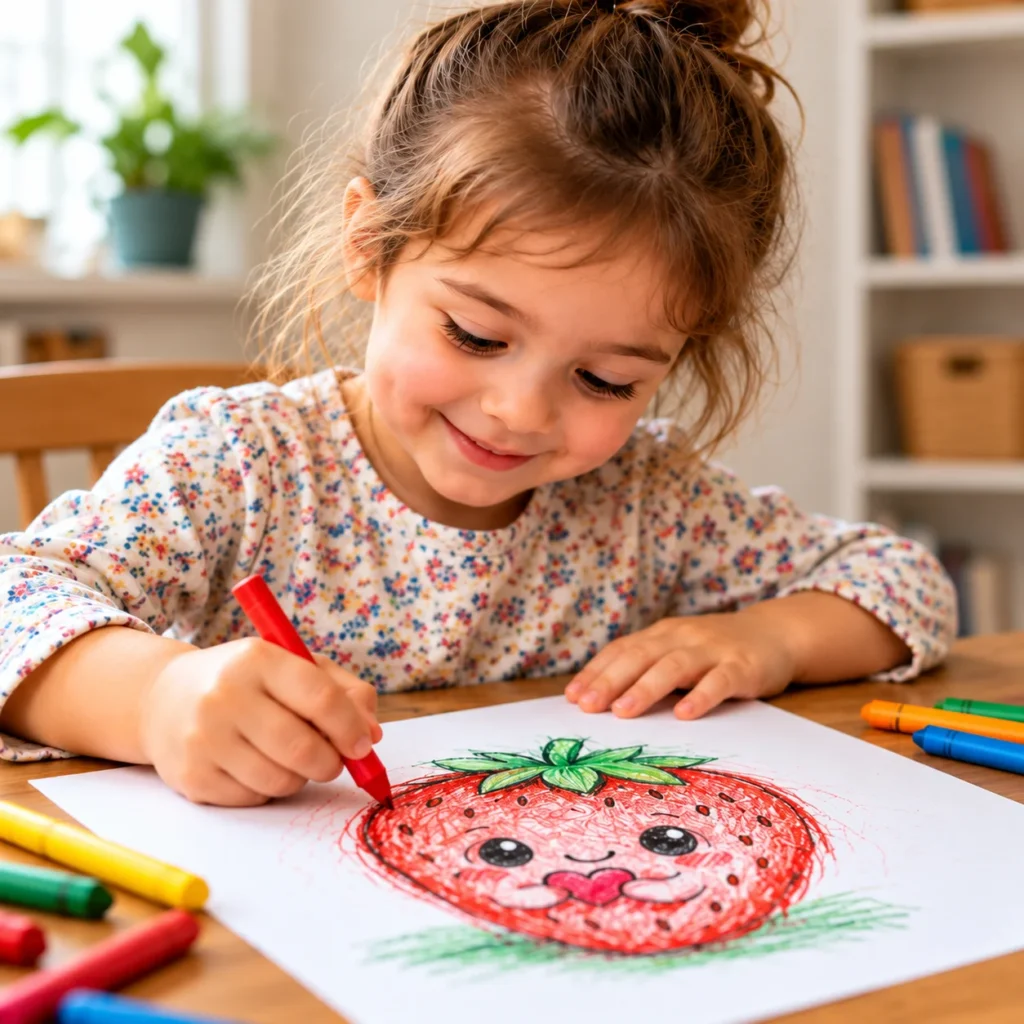
Drawing Can Give Feelings a Voice
Adults have a large emotional vocabulary. A young child may simply know that something feels good, scary, frustrating, or sad.
That difference matters. Asking a small child to explain exactly why they are upset can sometimes be difficult because they may not have the words yet.
Drawing offers another possibility. A child can make lines, choose colors, create people, draw an imaginary creature, or fill an entire page without needing to explain anything first.
Sometimes a story follows naturally. A child might tell you that a character is angry, that someone in the picture is scared, or that a drawing shows a particularly happy day.
Those conversations can give parents an opportunity to listen and help children gradually learn words for their emotions.
What Children May Express Through Their Drawings
Children’s pictures can reflect things that are important to them. Family members, friends, pets, favorite places, imaginary characters, and everyday experiences often find their way onto the page.
Their drawings can also change with their mood. One day might bring energetic scribbles and another careful little picture.
That does not mean every choice has a hidden message.
A child choosing black instead of yellow, drawing someone very small, or covering a page with heavy lines does not automatically tell you how that child feels. Context matters, and young children often make creative choices simply because they enjoy them.
Instead of trying to decode a picture, use it as an invitation to listen.
How Parents Can Talk About Children’s Drawings
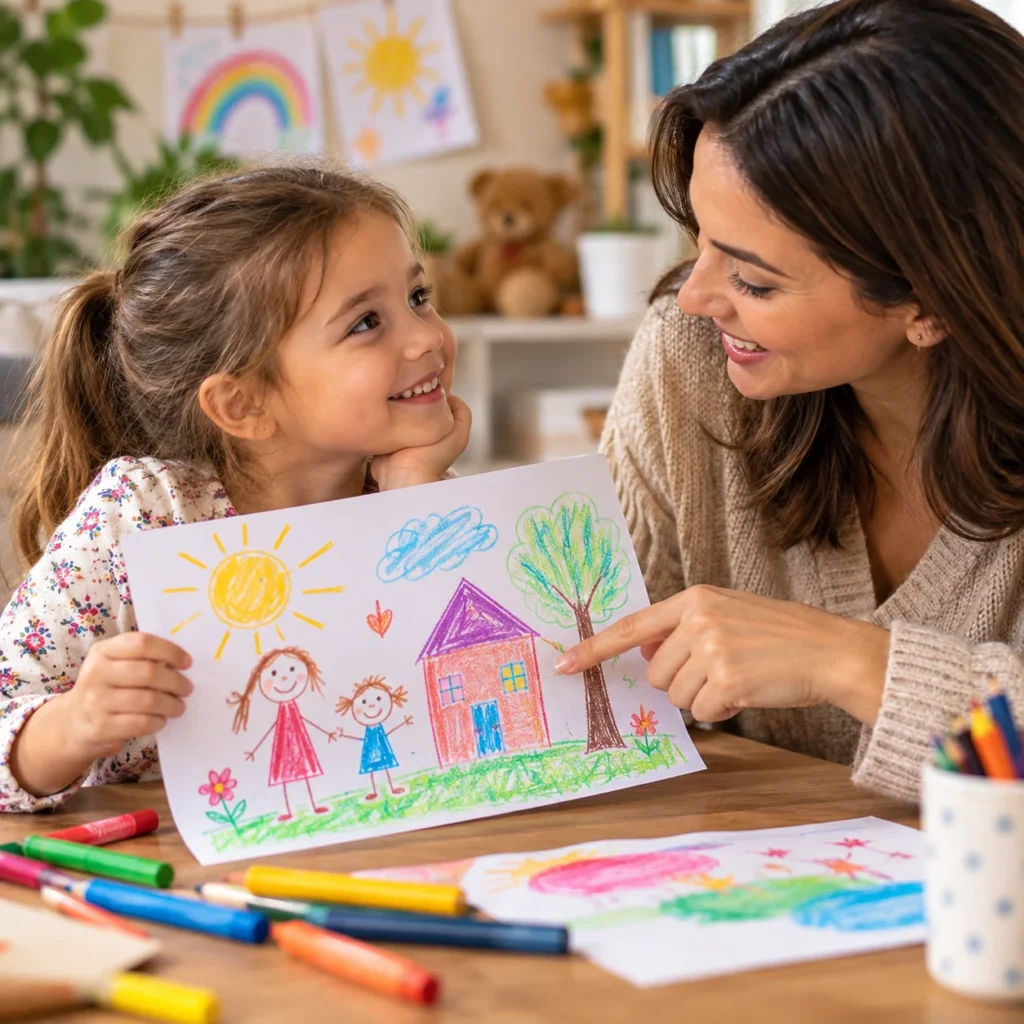
The way adults respond can make drawing feel either freeing or uncomfortable. Keeping the conversation curious and relaxed helps children feel that their ideas belong to them.
- Notice details: Try saying, “I see you used lots of blue here,” instead of deciding what the color represents.
- Ask gently: Questions such as “Would you like to tell me about your picture?” allow the child to choose how much to share.
- Let them lead: If your child says a strange looking shape is a dinosaur, accept the dinosaur rather than correcting the picture.
- Praise the effort: Talk about the time, imagination, or concentration involved instead of focusing only on how beautiful the finished drawing looks.
- Respect silence: Children do not have to explain every picture they make.
Simple Drawing Activities for Expressing Feelings
You do not need a complicated craft setup to encourage emotional expression. Keep the materials simple and let the conversation happen naturally.
- Draw your mood: Invite your child to draw what their mood looks like today using any colors or shapes they want.
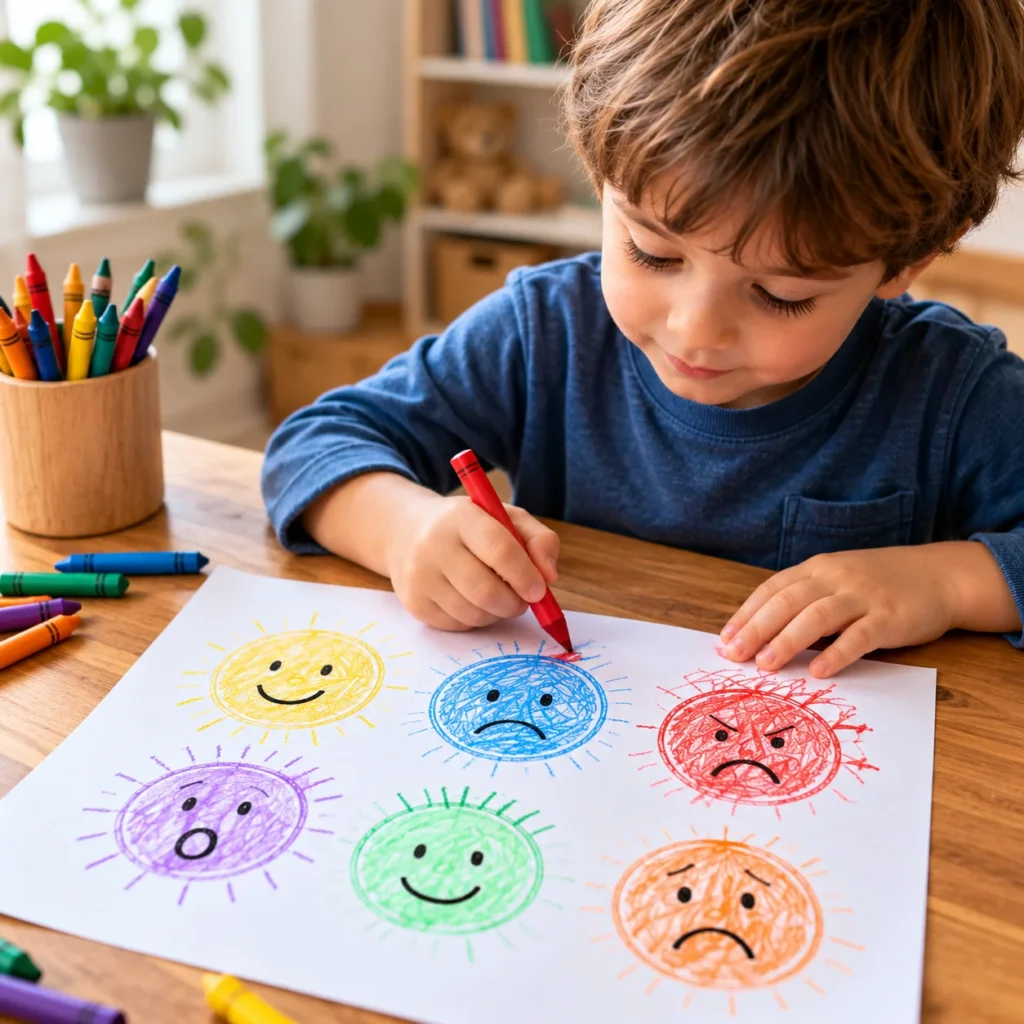
- Make feeling faces: Draw simple happy, sad, excited, surprised, worried, and angry faces together, then name each emotion.
- Create a feelings monster: Ask your child to invent a silly monster and decide how that monster is feeling.
- Draw the day: At bedtime or after school, invite your child to draw one part of the day they remember.
- Finish a picture: Start with a circle or a few playful lines and let your child decide what the marks become.
Creating a Comfortable Drawing Space
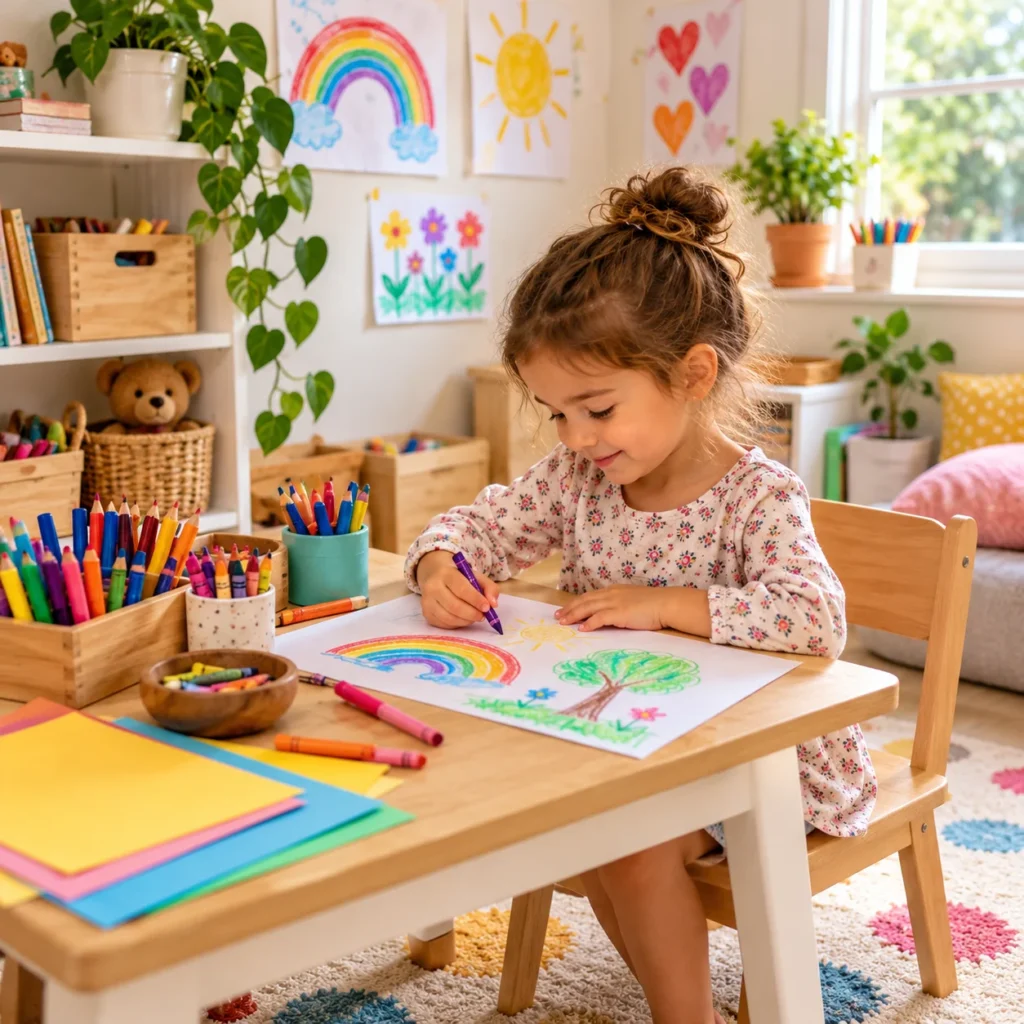
Children do not need expensive art supplies. Washable crayons, chunky pencils, markers appropriate for their age, and plenty of plain paper can provide hours of creativity.
Keep a small selection somewhere children can reach safely. Easy access means drawing can become something they choose naturally rather than an activity that always needs to be organized by an adult.
Try not to direct every picture. Coloring inside the lines has its place, but completely open drawing gives children more freedom to follow their own ideas.
It is also worth protecting some drawings rather than every single page. Let your child choose favorites for a folder, wall, or little art box so their creations feel valued without creating piles of paper everywhere.
Supporting Feelings Without Overinterpreting the Art
Children’s drawings can start meaningful conversations, but they should not be used as a simple test of a child’s emotional wellbeing.
Colors do not have one universal meaning. Neither do the size of figures, missing details, unusual shapes, or messy scribbles.
Look at the child, not just the paper. Their words, behavior, relationships, routines, and the circumstances surrounding a drawing provide much more context than one picture alone.
If a child repeatedly creates upsetting images and there are also concerning changes in behavior, sleep, mood, or everyday functioning, parents can discuss those concerns with an appropriate pediatric or child development professional.
Helping Children Build an Emotional Vocabulary
Drawing becomes even more useful when children gradually learn to connect pictures with words.
If your child tells you that someone in a picture is mad, you can gently add language such as angry, frustrated, or disappointed when it fits. If the character is happy, words such as excited, proud, peaceful, or loved can expand the conversation.
Keep this natural rather than turning the drawing into a lesson.
The goal is not to make children analyze themselves. It is to help them discover that feelings can be noticed, named, expressed, and talked about safely.
FAQ’s About Children, Drawing, and Feelings
Can drawing really help a child express emotions?
Yes. Drawing provides children with a nonverbal way to explore ideas and feelings while their ability to describe emotions with words is still developing. Talking about the picture afterward can also create an easy opening for conversation.
Should parents interpret the colors children use?
It is better not to assign a fixed emotional meaning to individual colors. Ask the child about the picture instead, since a color may have been chosen because it was a favorite, was nearby, or simply looked fun.
What should I do if my child does not want to talk about a drawing?
You do not need to push for an explanation. Show interest, respect the child’s choice, and allow drawing to remain an enjoyable activity rather than making every picture into a conversation about feelings.
Drawing helps young children express their feelings because it gives them something wonderfully simple: another way to communicate. With paper, colors, and the freedom to create, children can explore their inner world at their own pace.
Keep the supplies easy to reach, stay curious about what your child creates, and listen when they decide to share. Sometimes the most useful response to a child’s picture is simply giving them the space to tell you what it means to them.