
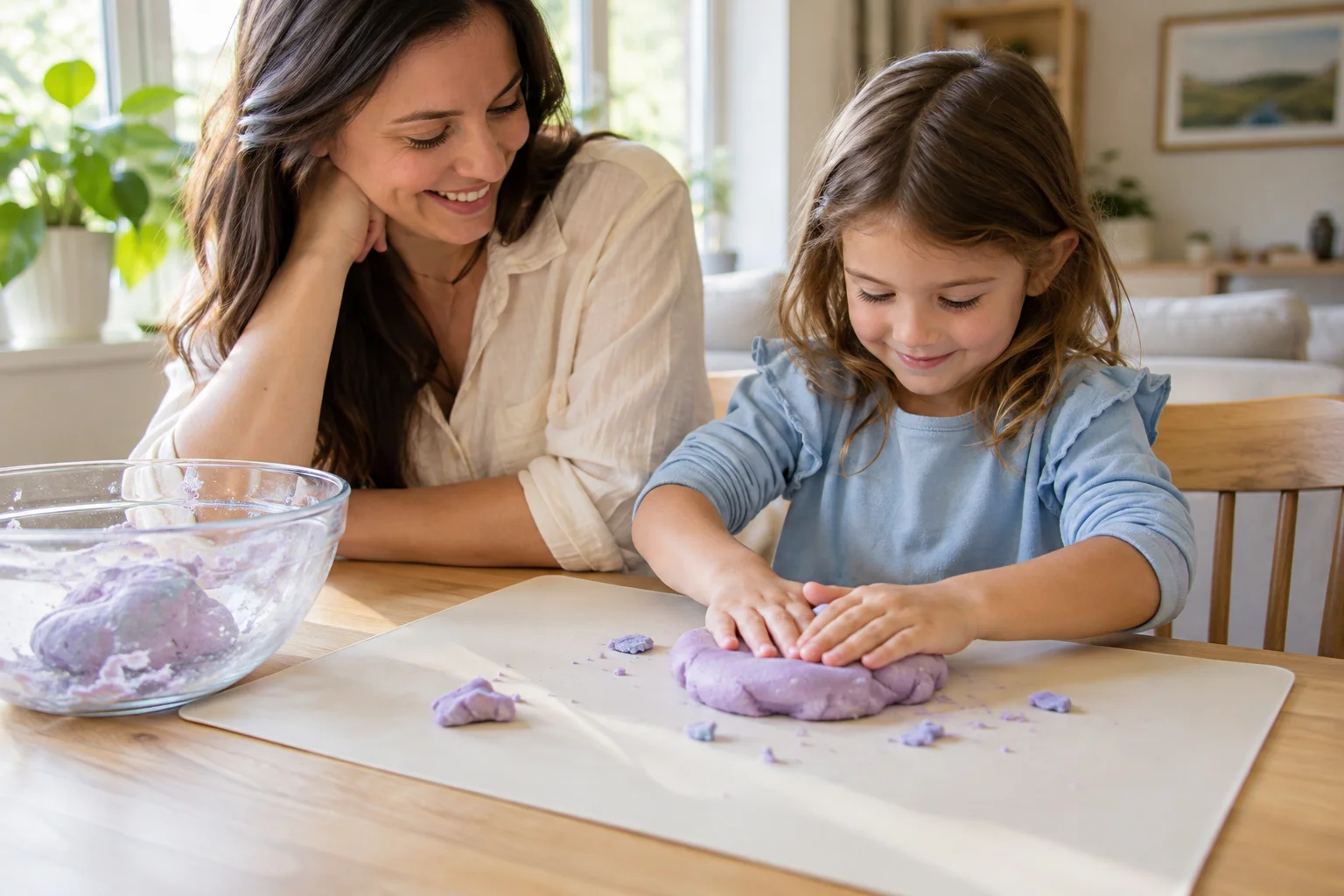
A bowl, a spoon, and two everyday ingredients can turn an ordinary afternoon into a hands-on activity. This cornstarch and dish soap dough gives children a chance to mix, squeeze, roll, and explore a new texture—with an adult helping along the way.
There’s no cooking involved, and you can adjust the mixture as you go. Set out a washable tray, gather your supplies, and enjoy watching the ingredients change from a powder and liquid into a soft, moldable mixture.
Before you begin: This dough contains dish soap and is not edible. Choose this activity for children who can reliably keep play materials out of their mouths, and supervise throughout. Dish soap can irritate the eyes, and some soap ingredients can irritate the skin.
What You’ll Need
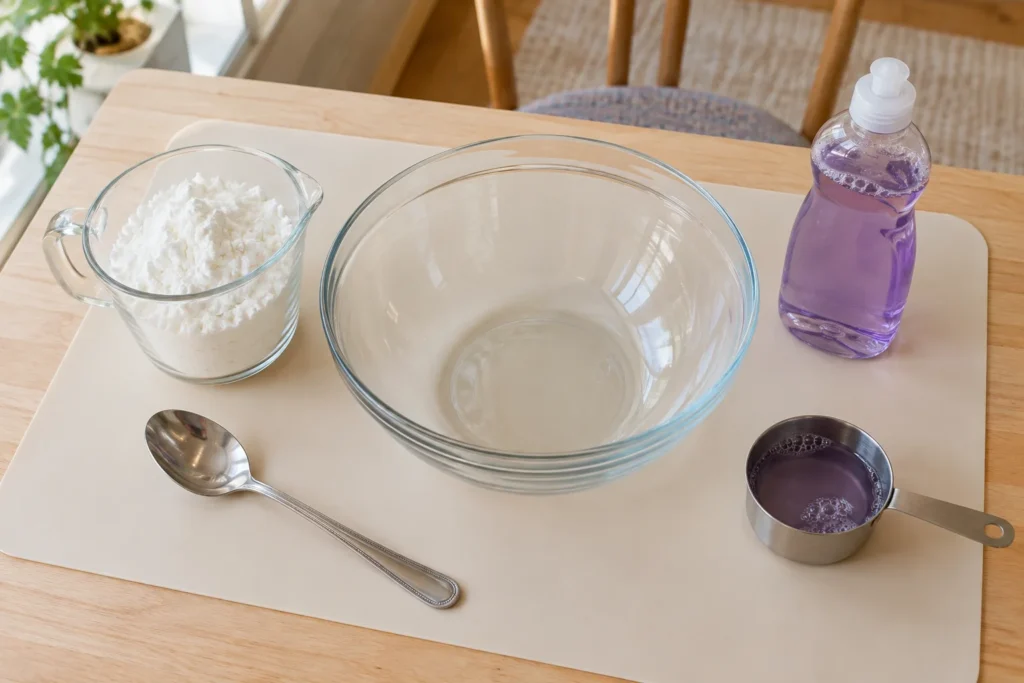
- 1 cup cornstarch, plus extra for adjusting the texture
- Up to ½ cup liquid hand dishwashing soap, added gradually
- A mixing bowl
- A spoon
- A washable tray or silicone mat
- Large play dough cutters or a small rolling pin, optional
Use liquid soap intended for washing dishes by hand. Keep dishwasher detergent, detergent pods, and laundry products out of this activity.
The soap’s color may give the dough a light tint. The purple appearance in the reference image is a visual example; your mixture’s color and texture will depend on the product you use.
How to Make Cornstarch and Dish Soap Dough

1. Prepare Your Play Area
Cover the table with a washable mat or place a tray in front of your child. Keep food and drinks away from the workspace.
Let your child help gather the bowl, spoon, and measuring cup while you handle the soap.
2. Measure the Cornstarch
Add 1 cup of cornstarch to the bowl. Pour it slowly to avoid creating a cloud of powder.
Invite your child to describe what they see. Does the cornstarch look fluffy, powdery, or smooth?
3. Add the Dish Soap Gradually
Pour in a little dish soap and stir. Continue adding small amounts, working toward the ½-cup amount only as needed.
Different dish soaps have different consistencies, so adding everything at once may leave the mixture too wet.
4. Mix and Gently Knead
Stir until the mixture begins to come together. Once it is manageable, gently press and fold it into a dough.
Aim for a soft texture that holds together and can be shaped. It may break apart when pulled rather than stretch like store-bought slime.
5. Adjust the Texture
If the mixture feels sticky or runny, sprinkle in more cornstarch and mix again.
If it feels dry and crumbly, add a few drops of dish soap. Make small adjustments until you find a workable consistency.
If it never forms a comfortable dough, stop rather than adding large amounts of soap.
Simple Ways to Play
Roll and Flatten
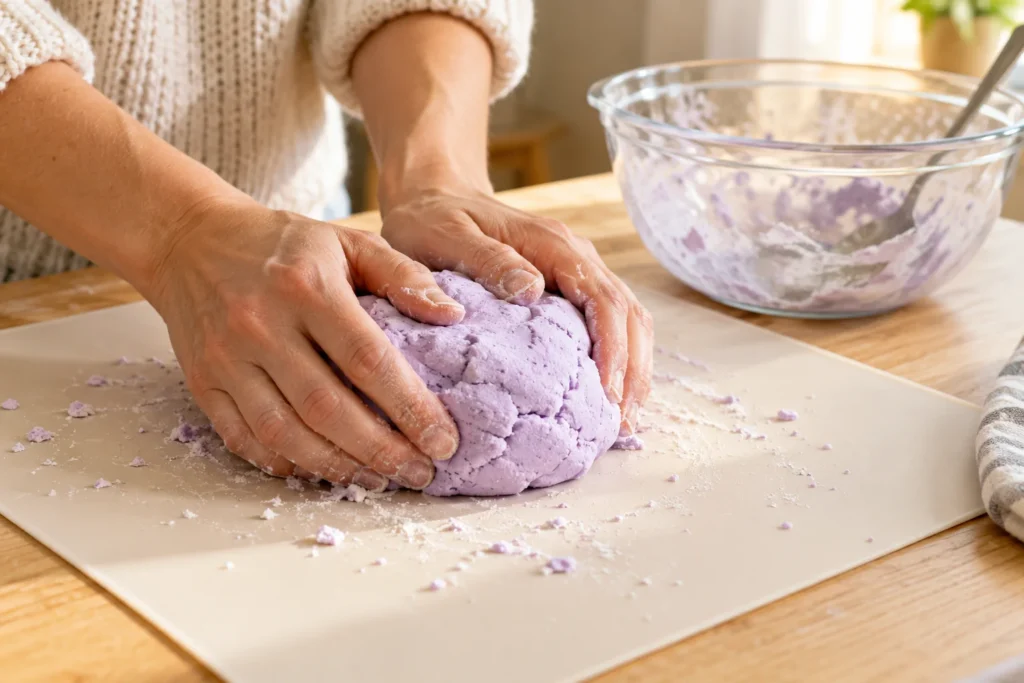
Roll small portions into balls, then flatten them with a palm or rolling pin. Compare a thick piece with a thin one.
Make Shapes
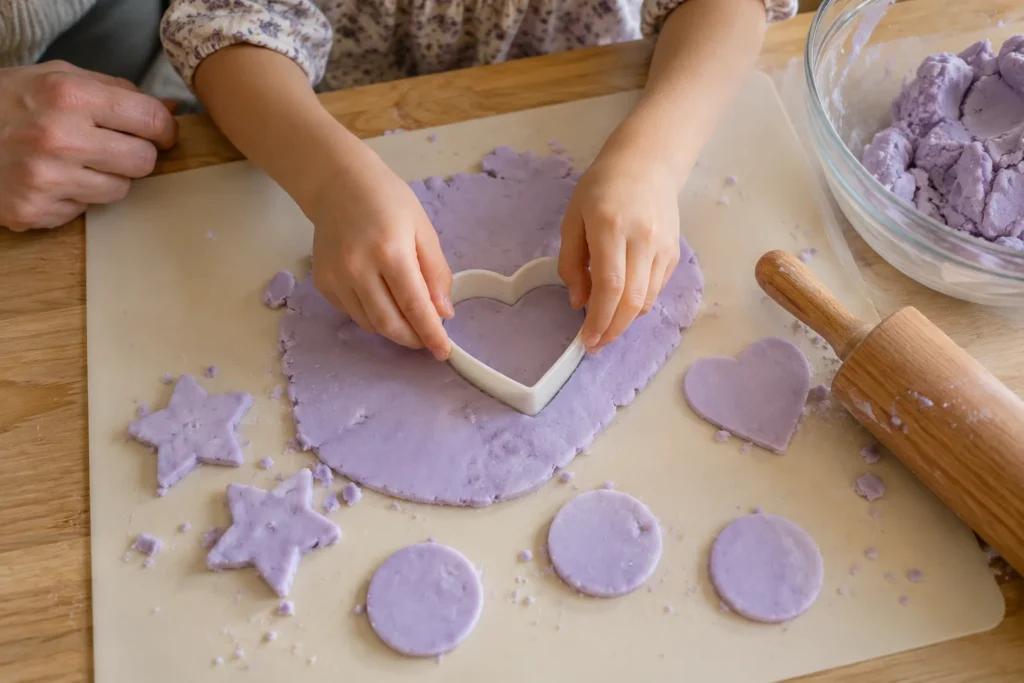
Use large play dough cutters to create circles, hearts, or stars. Count the shapes together or arrange them into a pattern.
Explore Imprints
Press a large, washable textured tool into the dough and lift it away. Look closely at the marks it leaves behind.
Compare Textures
Ask your child:
- “How did the cornstarch feel before we mixed it?”
- “What changed when we added the soap?”
- “What happens when you press gently?”
- “Can you make a smooth shape and a bumpy shape?”
There’s no need to produce a perfect creation. Mixing and noticing changes can be the whole activity.
Keep Play Comfortable
Stay nearby and remind children to keep the dough away from their mouths and eyes. Avoid using it on irritated or broken skin, and stop if it causes discomfort.
Children who dislike touching the mixture can explore it with a spoon instead. For children who still mouth play materials, choose an activity designed specifically for that stage.
Wash hands after play and keep the soap bottle out of children’s reach.
Cleanup
Collect the dough and place it in the trash rather than washing a large amount down the drain. Wipe the tray and table with a damp cloth, then wash the tools.
Make a small batch for one play session and discard it afterward. This keeps preparation simple and avoids having to guess how long a homemade mixture will last.
A little measuring, mixing, and shaping can make a lovely shared afternoon activity. Let your child guide the play, talk about what you both notice, and enjoy the process together.