
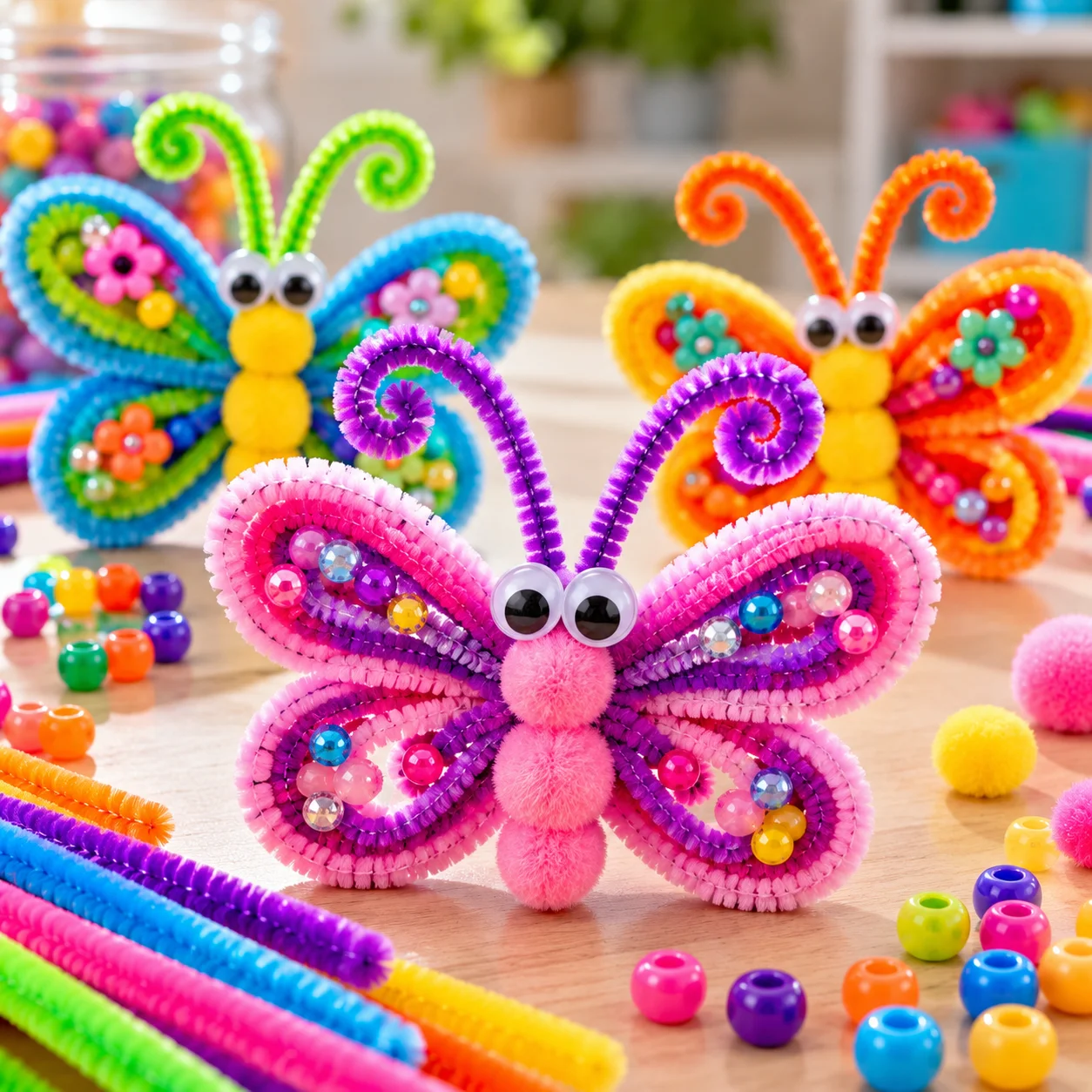
Some craft supplies require a whole afternoon of setup. Pipe cleaners are refreshingly simple. Put a colorful pile on the table, add a few basic extras, and kids can start twisting, curling, and creating almost immediately.
These easy pipe cleaner crafts for kids are especially handy when you need an inexpensive indoor activity that doesn’t involve hauling out half the craft closet. The original inspiration article uses the same approachable idea, starting with a small collection of supplies before moving through ten individual projects.
Pipe cleaners are flexible enough for younger kids to experiment with but versatile enough that older children can make surprisingly detailed creations. Butterflies, flowers, little animals, jewelry, and miniature characters can all start with the same handful of fuzzy stems.
There doesn’t have to be a perfect finished result, either. Give kids several colors and a few decorations, then let them decide what their creations should look like.
Supplies You’ll Need for Pipe Cleaner Crafts
You don’t need everything on this list for every project. A basic pack of colorful pipe cleaners is enough to get started, while pom poms, beads, googly eyes, felt, cotton balls, cupcake liners, and glue give kids more ways to decorate their creations. These are also the main types of extras used in the reference project collection.
- Colorful pipe cleaners
- Pom poms
- Googly eyes
- Pony beads or craft beads
- Felt scraps
- Cotton balls
- Cupcake liners
- Child safe craft glue
- Safety scissors
- Construction paper
- Markers
For younger children, keep small beads and googly eyes out of reach unless an adult is closely supervising.
1. Colorful Pipe Cleaner Butterflies
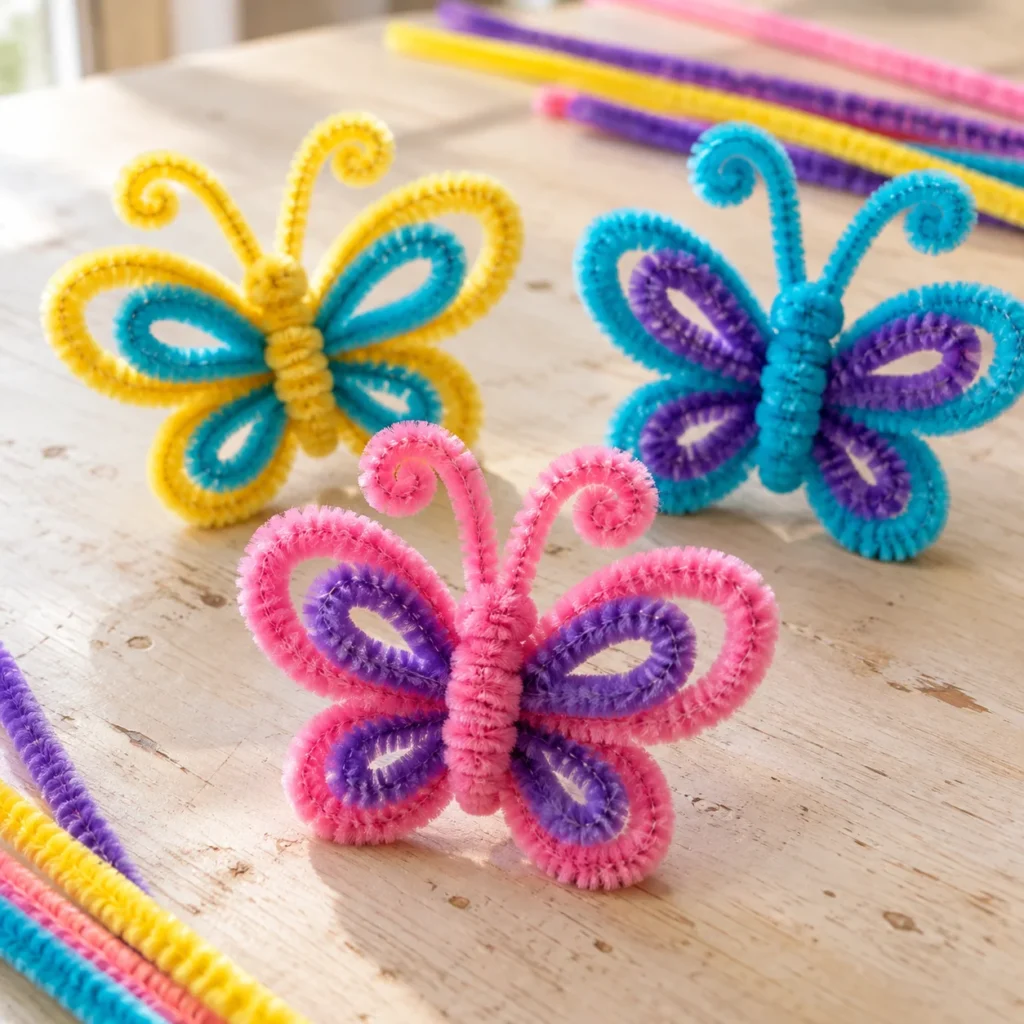
Butterflies are a great first project because slightly uneven wings only make them look more whimsical.
Choose two colorful pipe cleaners and bend each one into a pair of loops. Pinch the loops in the center to create the wings, then wrap another pipe cleaner around the middle to hold everything together.
Leave two short ends pointing upward and curl them gently around a pencil to make antennae.
Kids can add a pom pom body or googly eyes if they want a little more personality.
Fun idea: Make several butterflies in different sizes and attach them to construction paper for a colorful garden picture.
2. Beaded Pipe Cleaner Bracelets
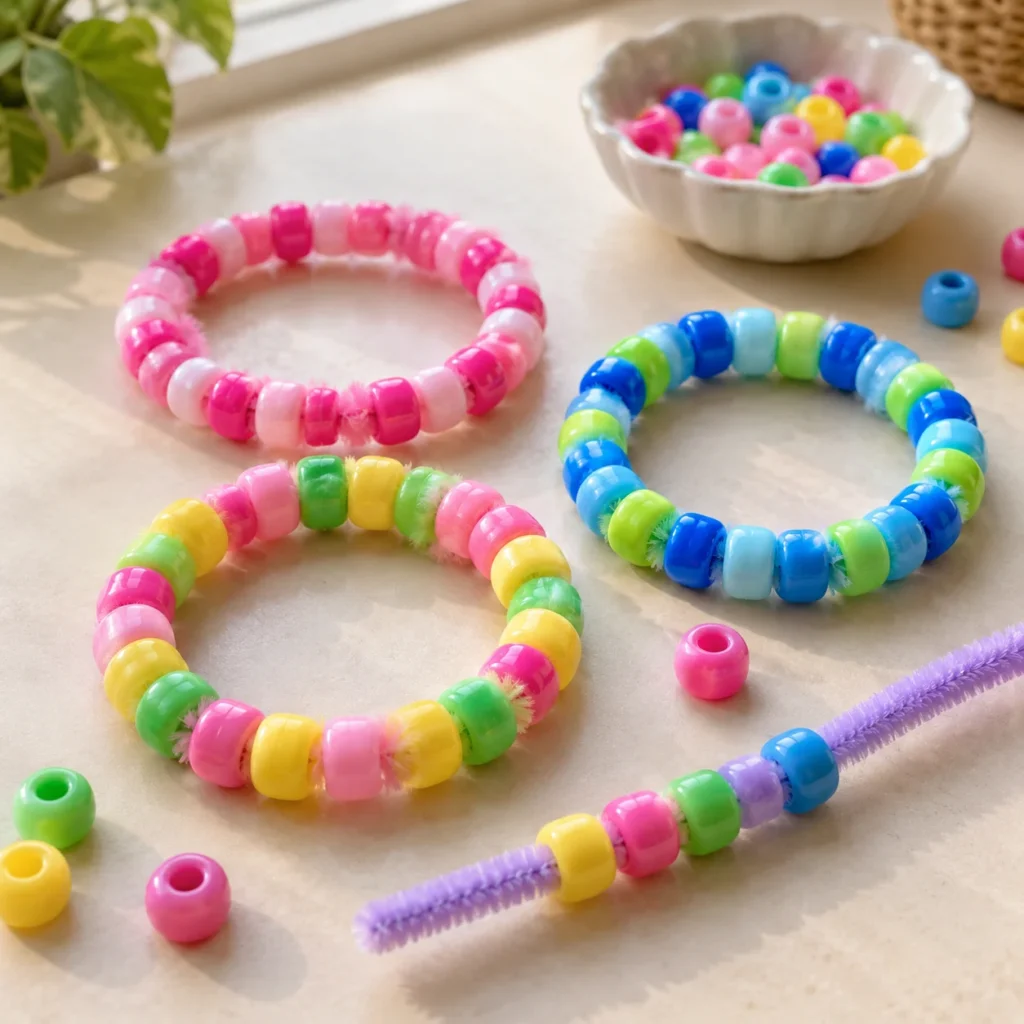
This is one of the easiest projects when kids want to make something they can actually wear.
Slide colorful craft beads onto a pipe cleaner, leaving a little empty space at both ends. Kids can create patterns with two or three colors or simply choose whatever beads catch their eye.
Once the bracelet is full enough, bend it gently around the wrist and twist the ends together. Fold the sharp tips inward so they aren’t sticking out.
For a matching set, make a bracelet and ring using the same bead colors.
Fun idea: Let kids spell short names or words with alphabet beads.
3. Silly Pipe Cleaner Creatures
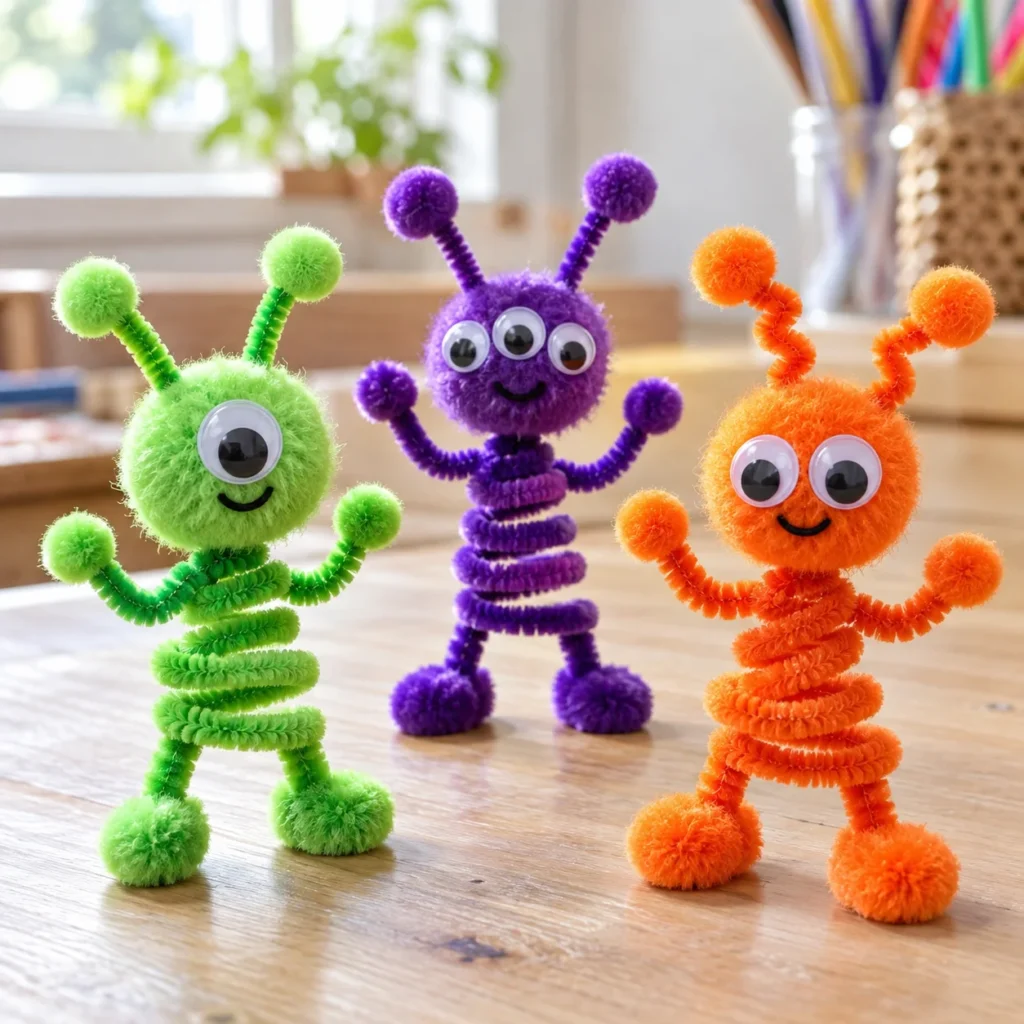
There are no rules for these little creatures, which is exactly why they’re fun.
Start by twisting one pipe cleaner into a small spiral or oval for the body. Add shorter pieces for legs, arms, tails, horns, or antennae.
Glue on a pair of googly eyes, or go completely silly and use three or four. A pom pom makes an easy head if the pipe cleaner body needs a little more shape.
Kids can make bugs, aliens, monsters, or an animal that doesn’t have a name yet.
Fun idea: Once everyone has made a creature, invent names and personalities for them.
4. Pipe Cleaner Flower Bouquet
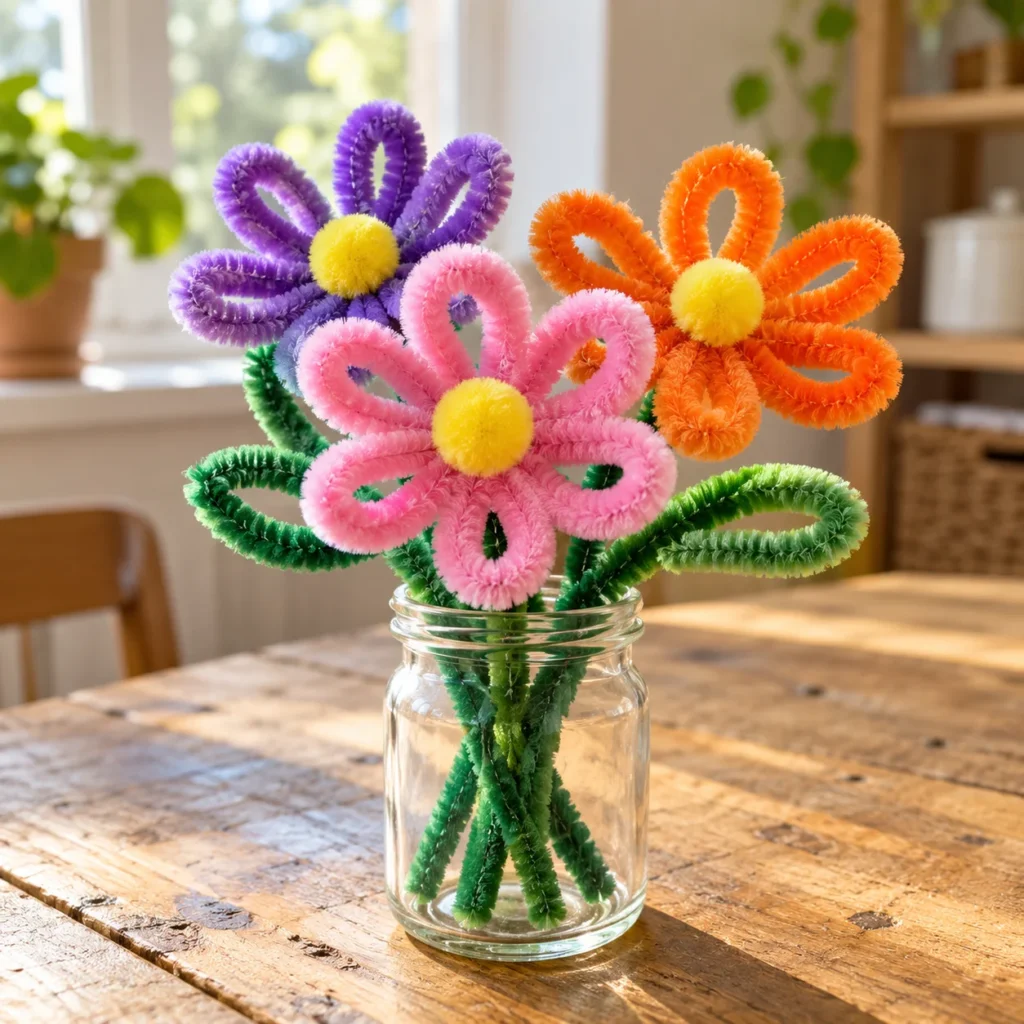
The reference article includes pipe cleaner flowers that can be shaped into different flower styles and gathered into a lasting bouquet. It’s an easy idea to customize with whatever colors you already have.
To make a simple flower, curl a bright pipe cleaner into several loops for petals. Twist the center together firmly, then attach a green pipe cleaner as the stem.
Add a small yellow pom pom to the center if you have one. Green pipe cleaner loops can become leaves.
Make several flowers and arrange them in a small cup or jar.
Fun idea: Tie a little paper note around the bouquet and give it to a teacher, grandparent, neighbor, or friend.
5. Tiny Pipe Cleaner People
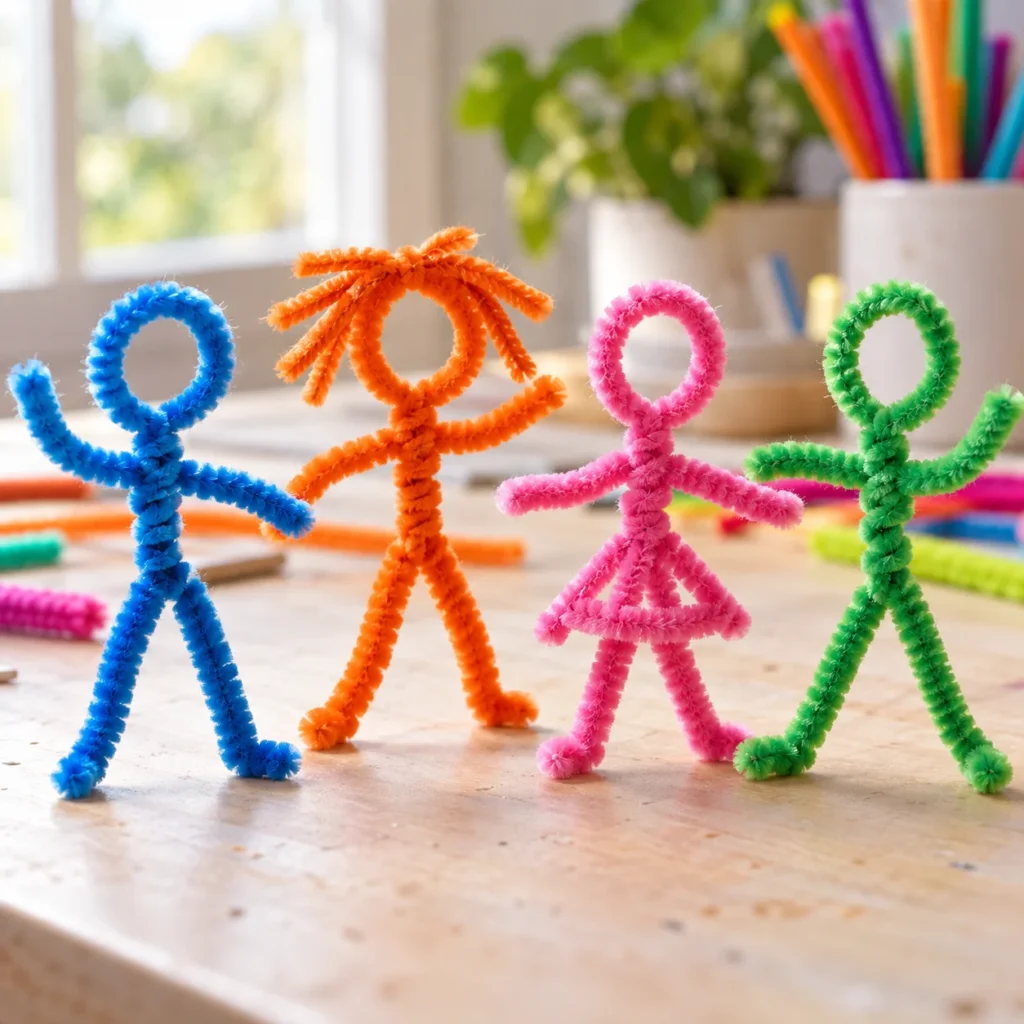
A few bends and twists are enough to turn fuzzy stems into miniature characters. The inspiration article also uses pipe cleaner people as one of its individual craft ideas.
Fold one pipe cleaner in half and create a small loop at the top for the head. Twist underneath the loop to form the neck.
Wrap a second piece around the middle for arms, then separate the bottom ends to create two legs.
Use extra pieces to add hair, a hat, a skirt, wings, or anything else your character needs.
Fun idea: Make a whole family of characters and build a little paper house for them.
6. Pipe Cleaner Rainbow
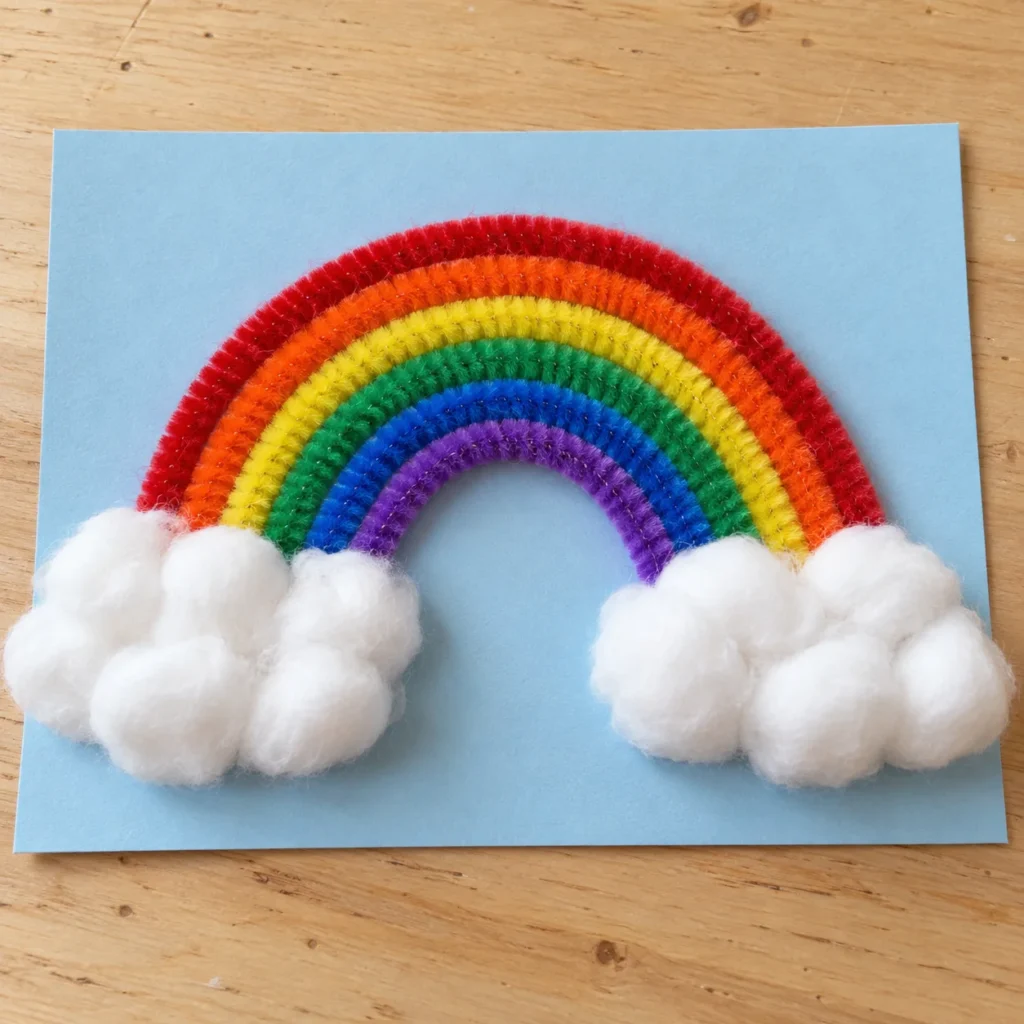
A fuzzy rainbow is bright, simple, and especially good for children who enjoy sorting colors.
Choose pipe cleaners in red, orange, yellow, green, blue, and purple. Bend each one into an arch, making each color slightly smaller than the one before it.
Line the arches up to create the rainbow. Glue the ends onto a piece of construction paper or cardstock.
Cotton balls make easy fluffy clouds at both ends.
Fun idea: Add a paper sun, raindrops, or a child’s name underneath the rainbow.
7. Pipe Cleaner Snails
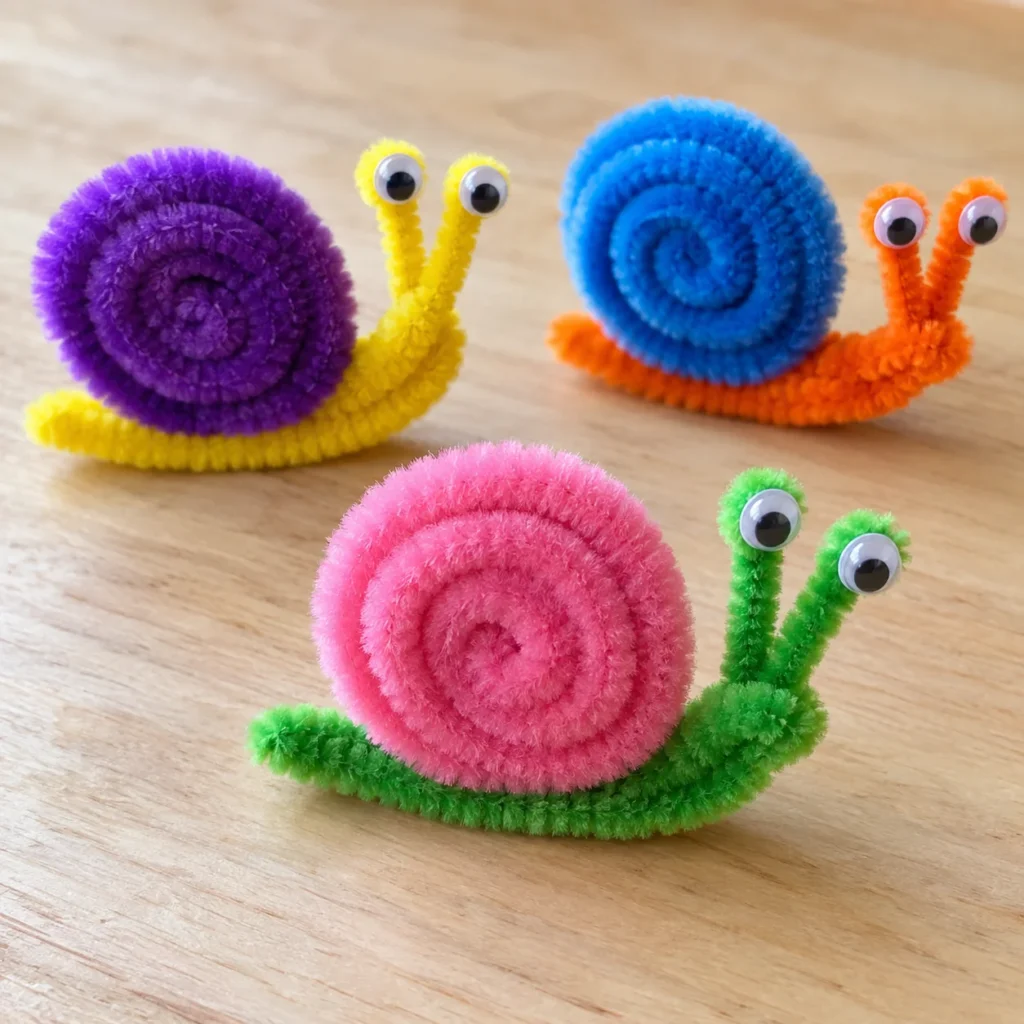
Snails are easy because the shell starts with one big spiral.
Roll a colorful pipe cleaner tightly around itself until you have a flat circle. Leave a small section sticking out from the spiral for the body.
Use another short piece for the head and bend two tiny ends upward for feelers. Add googly eyes if desired.
Make several using different colors and sizes, then line them up for a very slow race.
Fun idea: Glue the snails onto cardstock and let kids draw a garden around them.
8. Pipe Cleaner Crowns
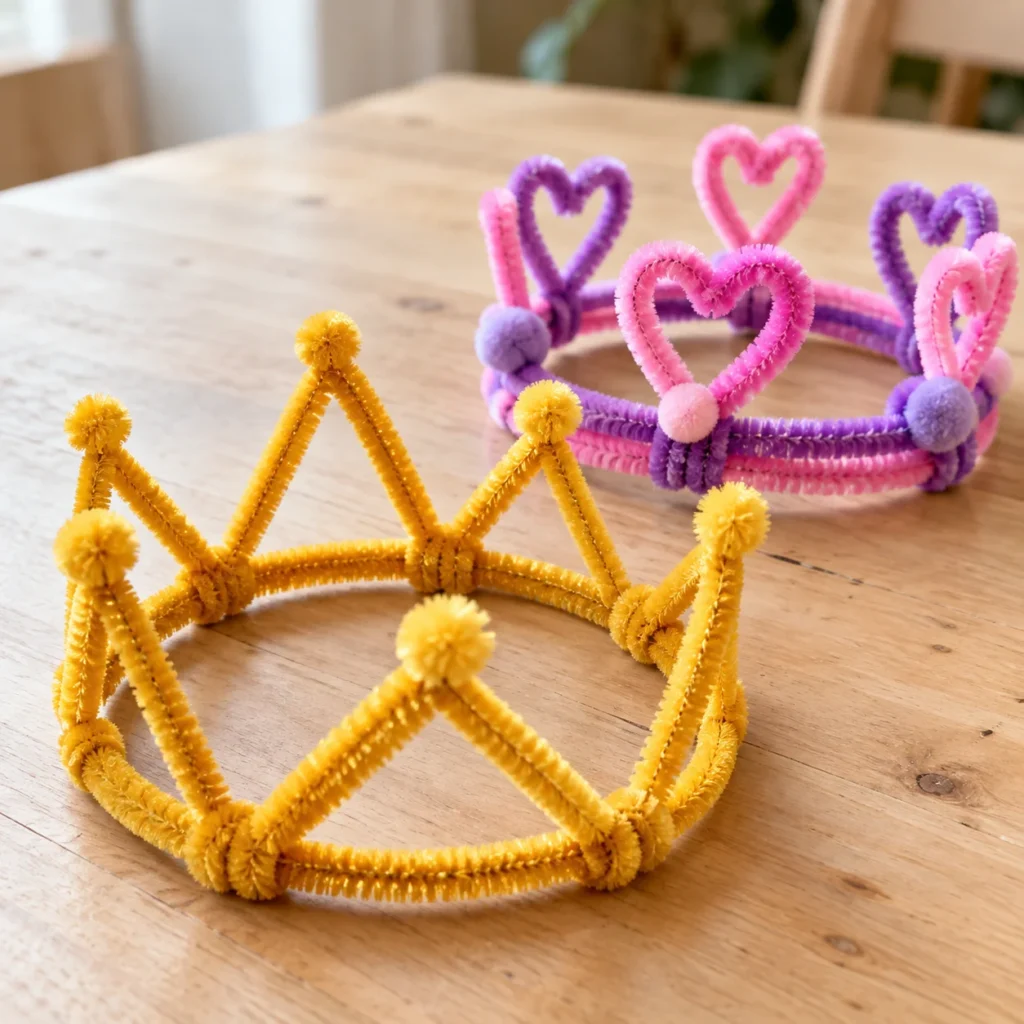
For a craft that immediately turns into pretend play, make a simple fuzzy crown.
Twist several pipe cleaners together until they’re long enough to fit comfortably around the child’s head. Join the ends securely to create the base.
Use additional pipe cleaners to make triangles, loops, hearts, or tall swirls across the top.
Metallic or glittery pipe cleaners work especially well here.
Fun idea: Add lightweight pom poms to the points and let kids create crowns for kings, queens, fairies, or imaginary rulers of their own kingdoms.
9. Pipe Cleaner Spiders
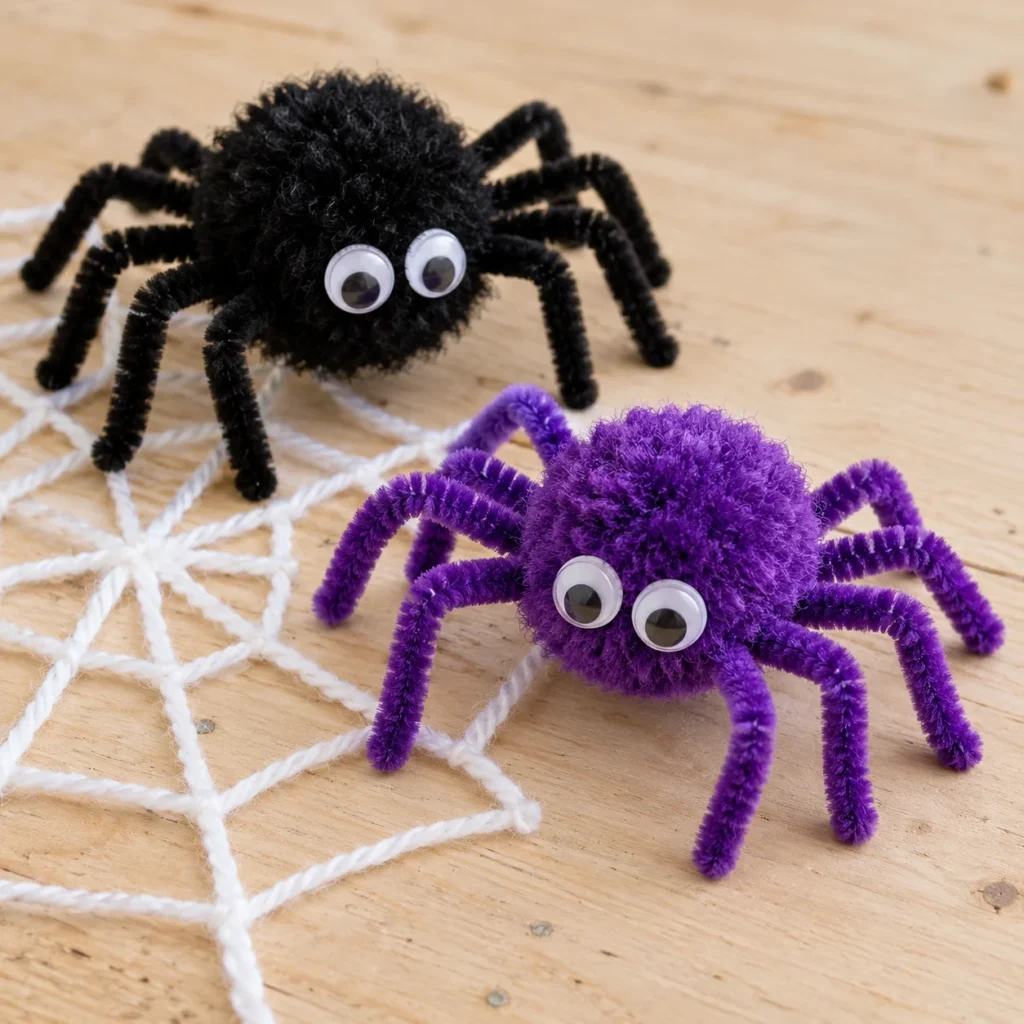
These are fun for bug themes, Halloween crafts, or kids who simply think spiders are cool.
Use a pom pom for the body or twist a pipe cleaner into a tight ball. Cut or fold four pipe cleaners in half to create eight legs.
Attach the legs around the body and bend each one near the middle so the spider can stand.
Finish with googly eyes. Two eyes look cute, but eight make the spider much more entertaining.
Fun idea: Make a simple web from white yarn and let the finished spiders live on it.
10. Pipe Cleaner Bubble Wands
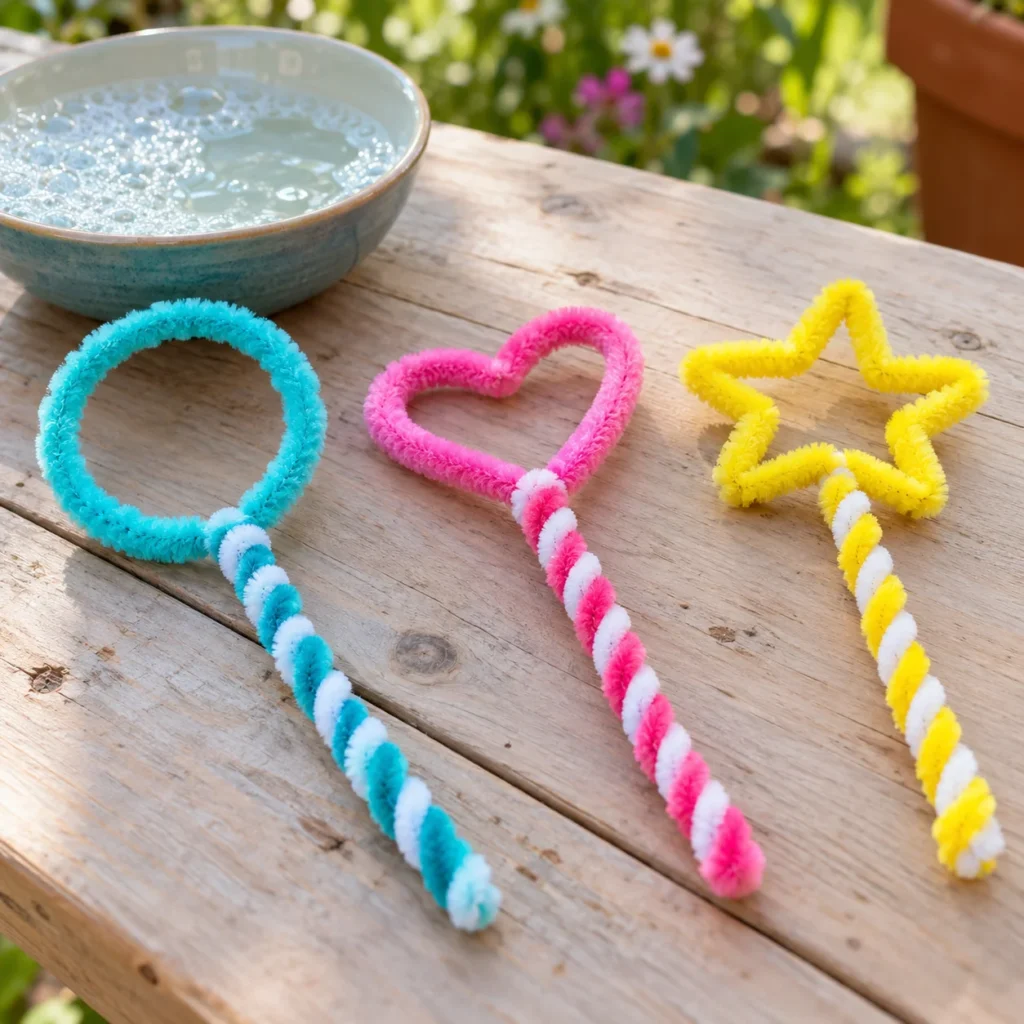
This project turns craft time into an outdoor activity afterward.
Shape one end of a pipe cleaner into a circle, heart, star, or another simple closed shape. Twist the end around the long handle so the loop stays secure.
For a sturdier handle, wrap a second pipe cleaner around the first.
Dip the shaped end into bubble solution and gently blow through it or wave it through the air.
Kids can experiment with different shapes and compare the bubbles they make.
Fun idea: Make several wands and take them outside for a bubble blowing contest.
Tips for Crafting With Pipe Cleaners
Set up a craft tray. A shallow tray or baking sheet helps contain beads, pom poms, and tiny decorations that otherwise seem determined to roll under the furniture.
Cut pieces ahead of time. Younger kids may find pipe cleaners easier to handle when an adult prepares a few shorter lengths first.
Fold sharp ends inward. The wire inside a pipe cleaner can poke through at the cut ends, so bend those tips back before kids play with the finished craft.
Let kids improvise. A butterfly that turns into a dragon or a flower that suddenly needs six googly eyes isn’t a failed craft. That’s the creative part.
Keep leftovers together. Even short scraps can become antennae, legs, flower centers, or tiny decorations for another project.
Why Pipe Cleaner Crafts Are Great for Kids
One of the best things about pipe cleaners is how quickly an idea can become something kids can hold. They don’t need to wait for paint to dry before deciding what happens next.
Twisting, threading beads, bending loops, and shaping small details also give little hands plenty to do. More importantly, these projects leave lots of room for kids to make their own decisions about colors, shapes, characters, and decorations.
They work nicely for rainy afternoons, classroom craft tables, playdates, quiet time, or those unexpected moments when everyone suddenly needs something to do.
Frequently Asked Questions
What age are pipe cleaner crafts good for?
Many simple pipe cleaner projects work well for preschool and elementary age children with appropriate adult supervision. Younger children may need help twisting pieces together or using scissors.
Small decorations such as beads and googly eyes can be choking hazards, so choose supplies based on the child’s age.
What can kids make with only pipe cleaners?
Plenty. Flowers, people, butterflies, rings, bracelets, spiders, snails, letters, hearts, stars, miniature animals, and simple sculptures can all be made without extra decorations.
How do you connect pipe cleaners together?
Place the ends beside each other and twist them around one another several times. For structures that need more support, overlap a larger section before twisting.
Can pipe cleaner crafts be made without glue?
Yes. Many designs can be held together entirely by twisting the pipe cleaners. Glue is most useful when adding pom poms, googly eyes, felt, cotton balls, or attaching finished crafts to paper.
A Simple Craft Box Goes a Long Way
You don’t need an overflowing craft cabinet to keep kids creating. A package of colorful pipe cleaners and a small container of basic decorations can become flowers one afternoon, tiny characters the next, and something completely unplanned after that.
Start with whichever of these easy pipe cleaner crafts catches their attention, then let the project change as they go. The best part might be seeing what kids decide to make once they stop following the example and start inventing their own.