
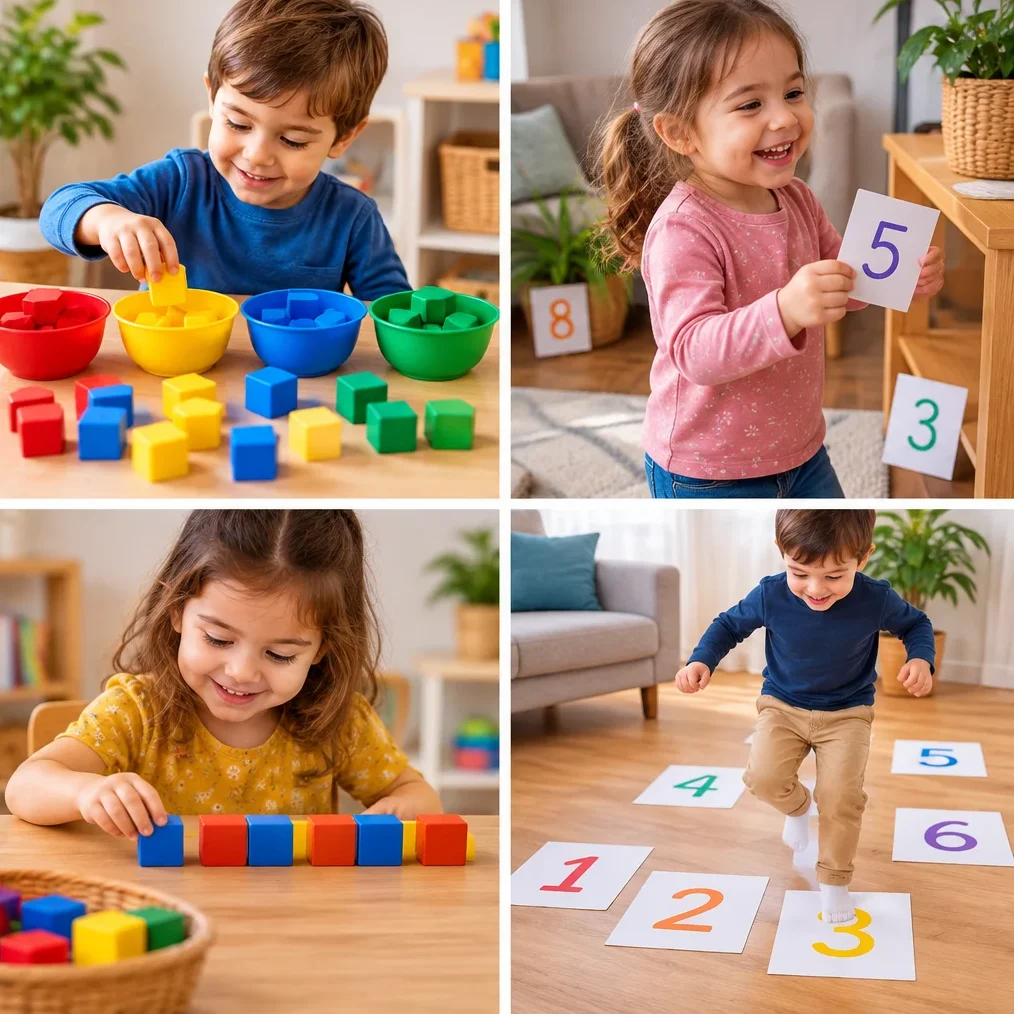
Learning doesn’t have to feel like school, especially for little kids. The best learning activities often look like simple play, with counting, matching, colors, movement, and plenty of chances to try again.
These six learning games are easy to set up at home and work especially well for preschool age children. Most use things you probably already have, and you can make each game easier or harder depending on your child’s age.
I like activities where the child can touch and move the pieces instead of only looking at a worksheet. It keeps little hands busy while numbers, letters, and patterns start making more sense.
You don’t need to play all six in one day. Pick one, keep the session short, and stop while your child is still having fun.
1. Count and Fill the Cups
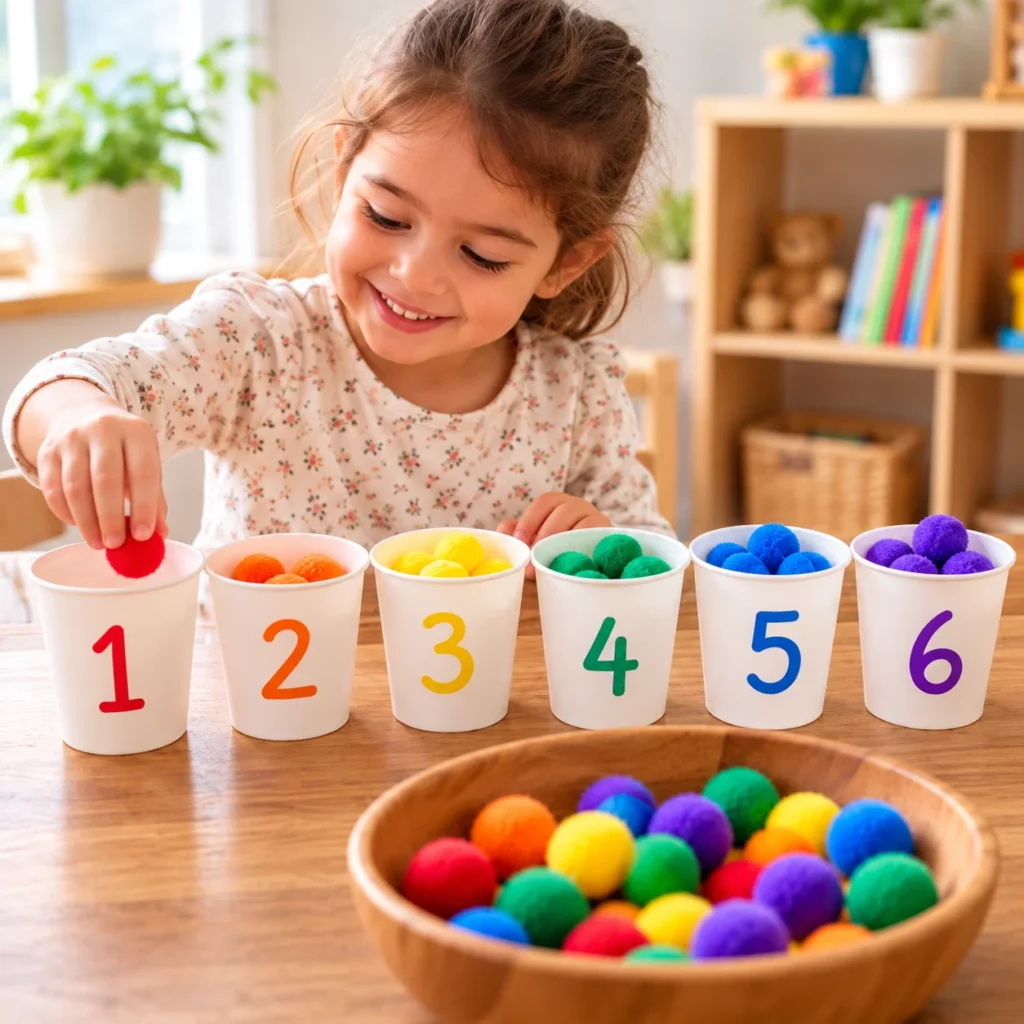
This simple counting game helps children connect a written number with an actual quantity.
Write the numbers 1 through 6 on six paper cups. Give your child a bowl filled with large safe objects, such as blocks, pom poms, or big craft balls.
Ask them to put one object in the cup marked 1, two objects in the cup marked 2, and continue until every cup is filled correctly.
For younger children, start with only numbers 1 through 3. Once counting becomes easier, add more cups and bigger numbers.
2. Color Sorting Game
Color sorting is an easy way to practice color recognition, matching, and early problem solving.
Place several colored bowls or pieces of construction paper on a table. Gather toys or other child safe objects in matching colors.
Your child’s job is to place every object with its matching color. A red block goes on red, a blue toy goes on blue, and so on.
To add a little challenge, ask questions such as, “Can you find three yellow things?” This brings counting into the game too.
3. Number Treasure Hunt
Turn number practice into a little treasure hunt around the house.
Write the numbers 1 through 10 on separate pieces of paper and hide them in easy to reach places. Ask your child to find the numbers and bring them back.
Once all the numbers are collected, work together to arrange them from 1 to 10.
For children who already recognize numbers easily, call out a specific number for them to find instead of collecting them in any order.
4. Match the Letter
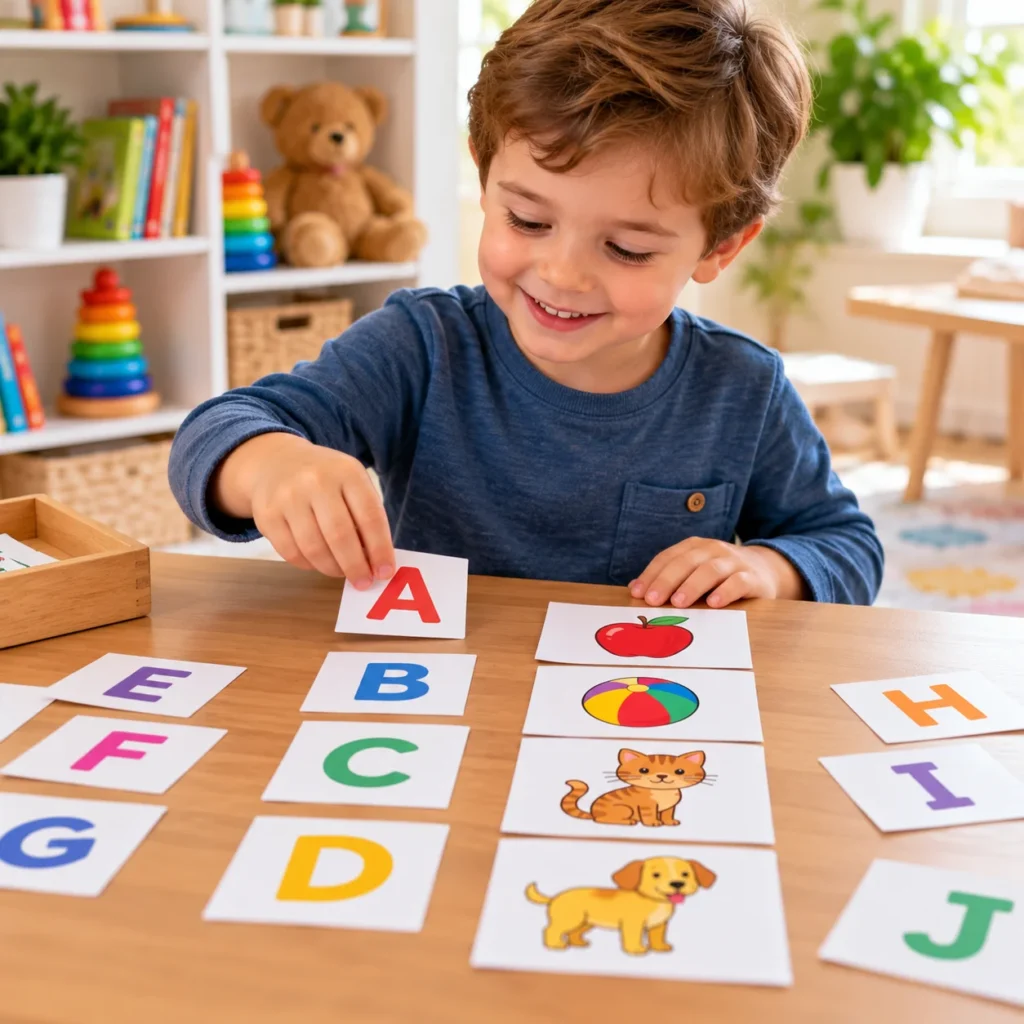
This game introduces letters without making children sit through a long lesson.
Write a few large uppercase letters on separate cards. Make another set with the same letters, mix them up, and place them face up.
Have your child match each letter with its partner. Start with just three or four letters so the game doesn’t become frustrating.
When your child gets comfortable, say the letter sound as each pair is matched. You can eventually add lowercase letters and have your child match uppercase letters with their lowercase partners.
5. Build a Simple Pattern
Patterns are a playful introduction to early math and logical thinking.
Use colorful blocks, large beads, toy cars, or other safe objects. Make an easy repeating pattern, such as red, blue, red, blue.
Ask your child what should come next.
Once that feels easy, try patterns such as yellow, yellow, green, yellow, yellow, green. Children can also create their own patterns for you to finish, which makes the activity feel more like a game together.
6. Jump to the Number
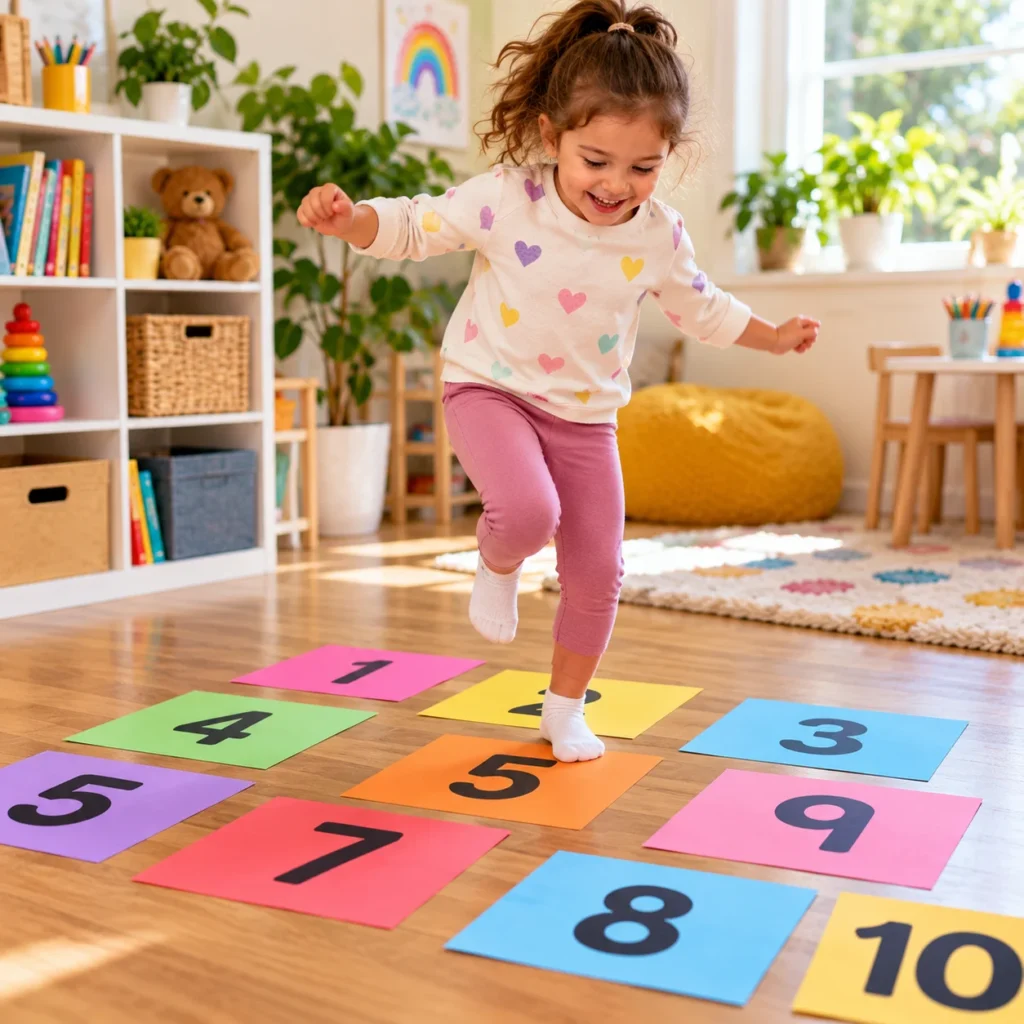
This learning game gets kids moving while they practice number recognition.
Write large numbers on separate sheets of paper and spread them safely across the floor. Call out a number and ask your child to jump to the correct sheet.
After a few rounds, add simple counting questions. You might say, “Jump to the number that comes after 4,” or “Can you jump three times on number 3?”
Keep plenty of space between the papers and play on a clear, nonslip surface.
Make Learning Games Work for Your Child
Keep each activity short and playful. Ten enjoyable minutes can be much more useful for a young child than a long activity they’ve stopped paying attention to.
Let mistakes be part of the game. Instead of immediately giving the answer, try a simple prompt such as, “Should we count those again?”
You can also repeat the same activity with different objects. Counting toy cars one day and blocks another day keeps a familiar skill feeling fresh.
What Kids Can Practice With These Games
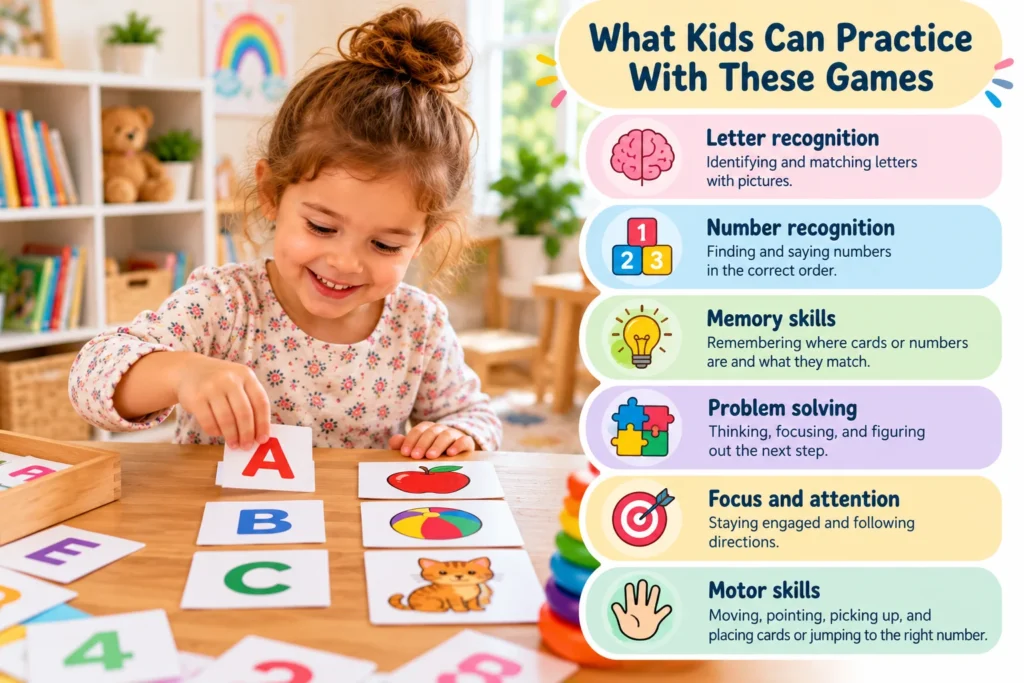
These activities can support several early learning skills at once.
- Counting skills: Children practice connecting numbers with real quantities.
- Color recognition: Sorting makes identifying and comparing colors more concrete.
- Letter recognition: Matching gives children repeated exposure to letter shapes.
- Pattern skills: Building sequences encourages children to notice what comes next.
- Fine motor practice: Picking up and sorting objects exercises small hand movements.
- Listening skills: Following simple game directions gives children practice paying attention and responding.
Tips for Parents
- Start small: Use fewer numbers, colors, or letters when introducing a new game.
- Follow their interest: Dinosaurs, cars, animals, or favorite colors can become the pieces in almost any activity.
- Repeat favorites: Young children learn through repetition, so there’s no need to constantly invent new games.
- Keep it safe: Avoid small objects for children who may put items in their mouths, and supervise activities closely.
Learning Game Variations
You can adapt these games as your child grows. Counting from 1 through 5 can become counting to 10 or 20, while simple color patterns can gradually become more complicated sequences.
Letter matching can also turn into a beginning word game. Once a child is ready, choose familiar objects and practice matching their first sounds with letters.
When to Play Learning Games
These games fit naturally into quiet afternoons, weekends, or a few minutes of play before dinner. You don’t need a special lesson time or an elaborate setup.
They can also be useful when you want an indoor activity that gives your child something purposeful to do without turning playtime into formal schoolwork.
Learning Games FAQ’s
What learning games are good for preschoolers?
Simple counting, sorting, matching, letter recognition, and pattern games are good places to start. Choose activities that fit the child’s current abilities and keep play sessions short.
How can I teach my child to count through play?
Use physical objects your child can move. Ask them to count blocks into cups, collect a certain number of toys, or jump a specific number of times so the number represents something concrete.
How long should a learning activity last?
There isn’t one ideal length for every child. For young children, short sessions often work well, and it’s fine to finish whenever attention or enjoyment starts to fade.
Learning at this age can be wonderfully simple. Six paper cups, a few blocks, or some homemade number cards can become a counting lesson without your child feeling like they’re doing an assignment.
Choose one of these six games, adapt it to whatever your child already loves, and let play do most of the teaching.